



Most damaged number plates result from everyday wear rather than a single impact. Cleaning methods, road grime, changing weather and small knocks can all leave acrylic plates scratched, faded or cracked over time. With the right maintenance, many of these problems are avoidable, helping your plates stay clear and secure for longer.
This guide explains five common habits that cause unnecessary damage, how to prevent them and when replacement becomes the best solution.
Using Harsh Chemicals When Cleaning Your Car
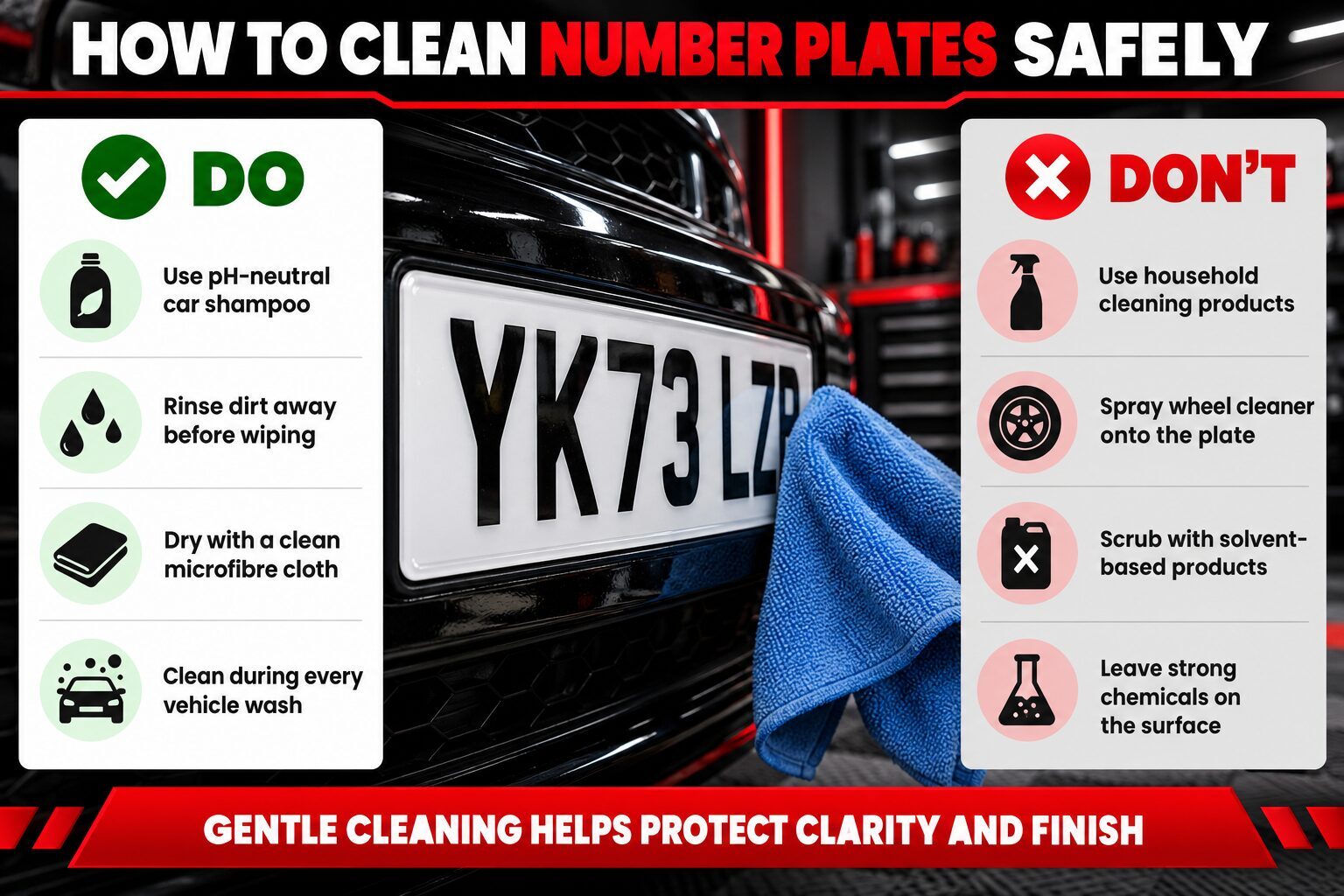
Strong cleaning chemicals can gradually damage the surface of acrylic number plates, reducing their clarity and finish.
Many car care products are designed for painted bodywork, alloy wheels or stubborn contamination rather than acrylic. Repeated exposure to aggressive cleaners can leave the surface looking dull, making premium finishes lose their crisp appearance over time.
One mistake seen regularly involves spraying wheel cleaner across the front of the vehicle without avoiding the registration plate. While the product may remove brake dust effectively, it is not intended for repeated use on acrylic.
Household cleaners create similar risks. Products containing solvents or powerful degreasers may affect the finish, particularly after repeated applications.
A safer routine protects the plate without sacrificing cleanliness. Wash the plate using pH-neutral car shampoo, rinse thoroughly and dry with a clean microfibre cloth.
Do | Don't |
Wash with pH-neutral car shampoo | Use household cleaning products |
Rinse dirt away before wiping | Spray wheel cleaner directly onto the plate |
Dry using a clean microfibre cloth | Scrub with solvent-based products |
Clean the plate as part of every vehicle wash | Leave strong chemicals sitting on the surface |
Good maintenance helps preserve the appearance of standard acrylic, 3D gel and 4D number plates while reducing unnecessary surface wear.
Wiping Your Number Plates with Abrasive Materials
Rough cloths and abrasive pads create fine scratches that dull the appearance of number plates over time.
Every journey leaves a layer of dust, grit, insects and road film across the plate. Rubbing this contamination with a dry cloth drags abrasive particles across the acrylic, creating fine scratches which reduce clarity.
This habit becomes more common after motorway driving, where dirt builds quickly across the front of the vehicle. Even paper towels or worn cleaning cloths can leave visible marks when trapped grit remains in the fibres.
Protecting the surface requires a careful approach.
Follow this checklist:
- Rinse away loose dirt before touching the plate.
- Use a clean microfibre cloth reserved for paintwork and plastics.
- Fold the cloth regularly to expose a clean surface.
- Avoid scouring pads, stiff brushes or rough sponges.
- Never wipe a dry, dusty plate.
Light surface marks may be unavoidable after years of use. Deep scratches, cloudy acrylic or damage affecting appearance may indicate that replacement is the better investment. If your current plate has reached that stage, explore the Demon Plates number plate builder to create a durable replacement suited to everyday driving.
Allowing Dirt and Road Salt to Build Up
Road grime and salt trap moisture against the surface, increasing the likelihood of staining and long-term deterioration.
Daily driving exposes number plates to mud, brake dust, standing water and winter road salt. These contaminants collect around the edges of the plate and behind mounting points, creating conditions where moisture remains trapped for longer.
Vehicles covering high annual mileage or spending much of the winter outdoors tend to accumulate heavier deposits. Leaving these contaminants in place makes cleaning more difficult and gradually affects the appearance of the plate.
Preventative maintenance is straightforward:
- Wash the registration plate whenever the vehicle is cleaned.
- Remove road salt promptly after winter journeys.
- Pay attention to the edges where grime collects.
- Check behind the plate during routine vehicle maintenance if access allows.
- Remove stubborn dirt gently rather than scrubbing aggressively.
These habits help maintain a cleaner appearance while reducing unnecessary wear caused by everyday driving conditions.
Placing Pressure on Your Plates When Loading the Car
Repeated pressure from luggage, tools or equipment can weaken mounting points and crack acrylic plates.
Rear number plates receive accidental knocks more frequently than many drivers realise. Heavy luggage, toolboxes, bicycles or garden equipment can press against the plate during loading, placing repeated stress around fixing points.
Tradespeople using vans face this issue regularly. Ladders, power tools and long equipment can shift during loading, transferring pressure directly onto the registration plate. Families loading pushchairs, sports equipment or holiday luggage can create similar damage without noticing.
Small impacts rarely cause immediate failure. Repeated stress weakens the acrylic until fine cracks appear around the screws or corners. Once a crack develops, vibration from normal driving allows it to spread further.
Avoid using the number plate as a contact point when loading the vehicle. Taking a little extra care protects both the mounting points and the acrylic surface.
Where cracks affect structural strength or readability, replacement provides a more reliable solution than temporary repairs.
Ignoring Loose, Cracked or Damaged Number Plate Fixings
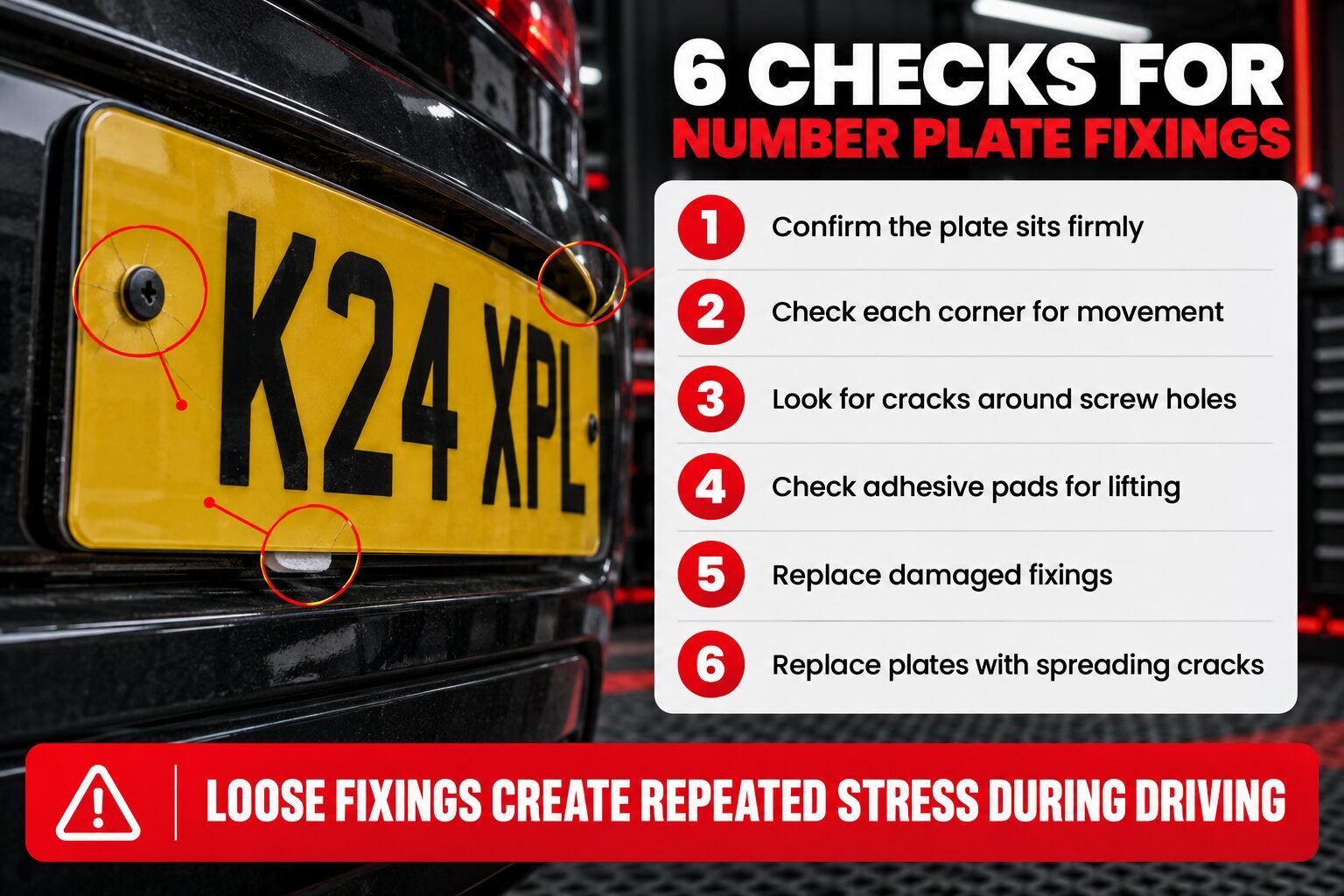
Loose fixings allow movement that places constant stress on the plate, leading to cracks or complete failure.
Even slight movement creates repeated stress during normal driving. Vibrations from uneven roads, speed bumps and motorway speeds gradually increase pressure around screw holes or adhesive pads.
Drivers sometimes tighten loose screws repeatedly without checking whether the acrylic has already begun cracking. Others leave ageing adhesive pads in place after they lose strength, allowing the plate to flex against the vehicle.
Inspect your plates every few weeks using this checklist:
- Confirm the plate sits firmly against the vehicle.
- Check each corner for movement.
- Inspect around screw holes for hairline cracks.
- Examine adhesive pads for lifting or deterioration.
- Replace damaged fixings before movement worsens.
- Replace the plate if cracks continue spreading or the registration becomes difficult to read.
Repairing a damaged mounting point rarely restores the original strength of the plate. Where cracks, fading or movement continue to develop, replacing the entire plate provides the safest long-term outcome.
For further guidance on roadworthiness, read our guide covering number plate issues that can lead to MOT failure.
Everyday habits play a major role in the condition of your number plates. Using suitable cleaning products, removing road grime, checking fixings and avoiding unnecessary impacts will help keep them clear and secure for longer.
If your plates become cracked, faded or difficult to read, replacement is the safest option. Explore Demon Plates' number plate builder to create quality replacement plates, or contact us if you would like expert advice before ordering.