



A number plate falling off feels minor at first, yet it can quickly turn into a legal issue and a safety risk.
UK law requires plates to be clearly displayed and securely fixed, or you could face fines and MOT problems. For car enthusiasts upgrading to 3D or 4D styles, or business owners running branded vans, a loose plate sends the wrong message and creates hassle you do not need.
In this guide, we break down the five most common causes behind a number plate falling off and show you how to prevent it with proper fitting, strong adhesives and quality materials that last - and how we at Demon Plates can be there to help out.
Worn or Poor Quality Adhesive Pads
Many plates rely on foam adhesive pads, yet cheaper versions break down faster than you might expect. Heat softens weak glue, rain seeps into low-grade foam, and road spray chips away at the bond. Over time, the plate starts to lift at the corners, then airflow does the rest.
Budget pads might hold for a few weeks, yet they rarely survive a full British winter or a hot summer day. If you want a secure number plate fitting, you need automotive-grade strength pads rather than generic sticky squares.
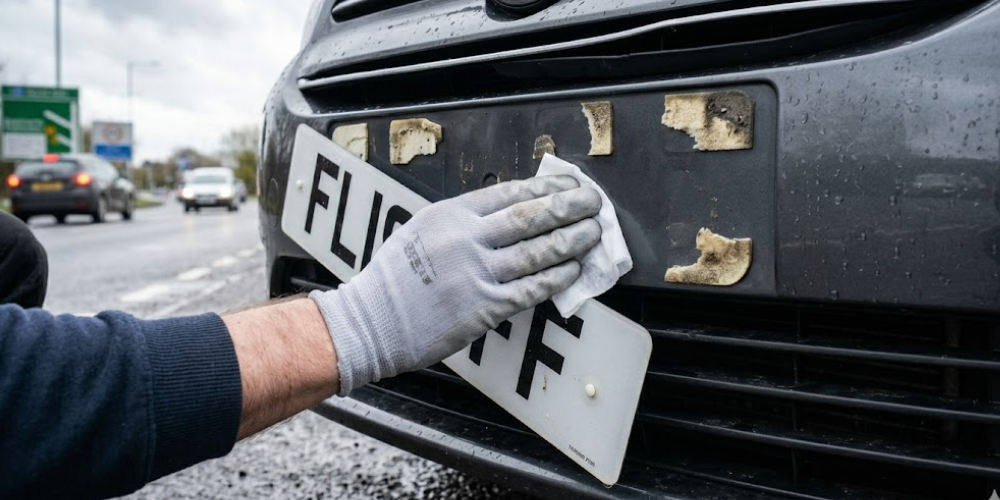
High-tack number plate adhesive pads, available with our number plate fitting kits here at Demon Plates are built for rugged exterior use, gripping firmly to painted surfaces and resisting moisture. Pairing quality pads with correct fitting methods gives your plate a solid hold that stays put through daily driving.
Incorrect Installation or Surface Preparation
Adhesive fails more often from poor preparation than from product faults.
A surface with polish residue, dirt or wax stops glue from bonding properly. Curved bumpers can also create tension points, which weaken the hold over time.
If you are wondering how to fix a loose number plate, go back to the beginning and consider how you are starting with your fitting process. A careful car plate installation often makes the difference between months of stability and repeated replacements.
It doesn’t even need a lot of effort, just follow this simple method:
- Clean the mounting area with an alcohol wipe to remove grease and residue.
- Let the surface dry fully before applying pads.
- Align the plate carefully, then apply firm pressure for at least 30 seconds.
Taking a few extra minutes during fitting improves adhesion and reduces the chance of movement once the vehicle is back on the road.
Cheap or Brittle Number Plate Materials
Adhesive strength matters, yet plate quality plays an equal role. A thin acrylic can flex under pressure, which weakens the bond between pad and plate. Brittle plastics may crack around screw holes (more than likely, you will have seen this up close on plates before), leaving the plate unstable even if the fixings stay tight.
Low-cost plates often warp slightly after exposure to heat or cold. That subtle distortion creates gaps between the plate and bumper, giving wind and vibration room to work.
Upgrading to high-grade acrylic or gel designs reduces flex and improves durability. Think about perhaps opting for out premium 4D number plates here at Demon Plates that use solid materials that maintain shape and resist cracking.
A rigid, well-made plate supports the adhesive rather than fighting against it, helping you avoid repeated refitting.
Weather Damage and Temperature Changes
British weather shifts quickly, and adhesives feel the strain. Cold temperatures cause materials to contract, which can loosen the bond. Intense sunlight weakens inferior glue, and constant rain adds moisture into any vulnerable edges.
UV exposure will gradually break down low-quality plastics, leaving them brittle and more likely to detach. Seasonal expansion and contraction create tiny movements that add up over months of driving.
Choosing UV-resistant pads and durable plate materials reduces this risk. A quick visual check at the start of winter, and again before summer sets in, helps catch lifting corners early. Spotting such issues before a plate drops onto the carriageway protects both your vehicle and your record.
Loose or Damaged Fixings
Screws and caps often loosen through vibration.
Motorway speeds, potholes, and daily driving shake fittings over time. Plastic inserts can degrade, and decorative caps may crack, leaving the plate unsupported.
Relying on a single fixing method increases the chance of failure. For fleet drivers and business owners, a missing plate can disrupt schedules and damage professional image.
Using quality plate fixing kits, such as those we can supply here at Demon Plates, with corrosion-resistant screws, provides a more stable solution. Many drivers choose a double-fix approach, combining adhesive pads with mechanical fixings for added security.
This layered method spreads the load and reduces stress on any single point.

Remember, a well-fitted number plate falling off rarely happens without warning, and it’s more important than you think to keep an eye on them.
Worn pads, poor preparation, weak materials, harsh weather and loose fixings all play a part. Addressing each factor with care improves reliability and saves repeated expense.
Demon Plates offers premium adhesives, durable acrylic designs and complete fitting kits that support secure number plate fitting from day one. If your current setup feels unstable, upgrading your materials and installation method can restore confidence and keep your vehicle road-legal and looking sharp.