



Autumn can be particularly tough on number plates. Persistent rain, damp leaves, muddy roads and colder mornings all increase the risk of damage, especially if your plates already have chips or scratches. A quick inspection before winter can help prevent minor wear from becoming a more expensive replacement.
This guide explains how autumn affects acrylic number plates, what warning signs to look for and the maintenance steps that help keep your plates clean, readable and in good condition.
Heavy Rain Can Allow Moisture to Enter Damaged Plates
Heavy rainfall can worsen existing cracks and chips by allowing moisture to penetrate damaged areas.
An undamaged acrylic number plate is designed to withstand everyday driving conditions. Once the surface has been chipped or cracked, water can collect around weakened areas, particularly near the edges or fixing points. Repeated exposure to wet conditions may contribute to lifting, surface deterioration or further separation where damage already exists.
Vehicles parked outdoors throughout autumn face the greatest exposure because the plates remain wet for longer between journeys.
To reduce the risk:
- Inspect both number plates after prolonged rainfall.
- Check carefully for cracks around corners and fixing holes.
- Remove mud and debris before moisture becomes trapped.
- Replace plates showing signs of cracking, peeling or delamination rather than waiting for winter.
Fallen Leaves Can Trap Dirt and Moisture Against the Surface
Leaves and organic debris trap moisture against number plates, increasing the likelihood of staining and surface deterioration.
Parking beneath trees may leave wet leaves, tree sap and fine dirt resting against the plate for several days. This creates a damp environment where grime remains in contact with the surface instead of drying naturally. While leaves do not damage acrylic directly, prolonged exposure makes plates harder to clean and can highlight existing wear.
A seasonal inspection routine should include:
- Removing leaves whenever you wash the vehicle.
- Cleaning away tree sap before it hardens.
- Checking around the plate edges where debris collects.
- Looking for fading, scratches or lifting that may have been hidden beneath dirt.
If inspection reveals damage beyond routine cleaning, explore replacement options using the number plate builder to compare suitable plates before winter arrives.
Road Mud Can Scratch and Dull the Finish
Road mud contains grit and fine particles that gradually scratch acrylic surfaces if left in place or cleaned incorrectly.
Autumn journeys across rural roads, country lanes and construction routes expose number plates to abrasive contamination. Wiping dried mud with a cloth drags fine particles across the acrylic surface, leaving light scratches which gradually reduce clarity and appearance.
A safer cleaning routine includes rinsing loose contamination away before touching the plate. Follow with warm water, a pH-neutral vehicle shampoo and a clean microfibre cloth using light pressure. Separate cloths for paintwork and number plates also help reduce the transfer of grit.
Drivers covering high annual mileage should include number plates in every regular wash rather than waiting until heavy dirt has accumulated.
Falling Temperatures Make Acrylic Vulnerable to Cracking
Lower temperatures can make existing chips and weaknesses more likely to develop into larger cracks.
Temperature changes between mild afternoons and cold mornings place additional stress on damaged acrylic. An intact plate should cope with seasonal conditions, although existing defects may spread as the material expands and contracts over time.
Older number plates deserve particular attention before winter. Small chips that seem cosmetic during late summer may become more noticeable as colder weather arrives.
If you would like to understand other common causes of plate damage throughout the year, read our guide covering the top reasons how number plates get damaged before deciding whether repair or replacement is the better option.
Early Frost Can Weaken Existing Chips and Damage
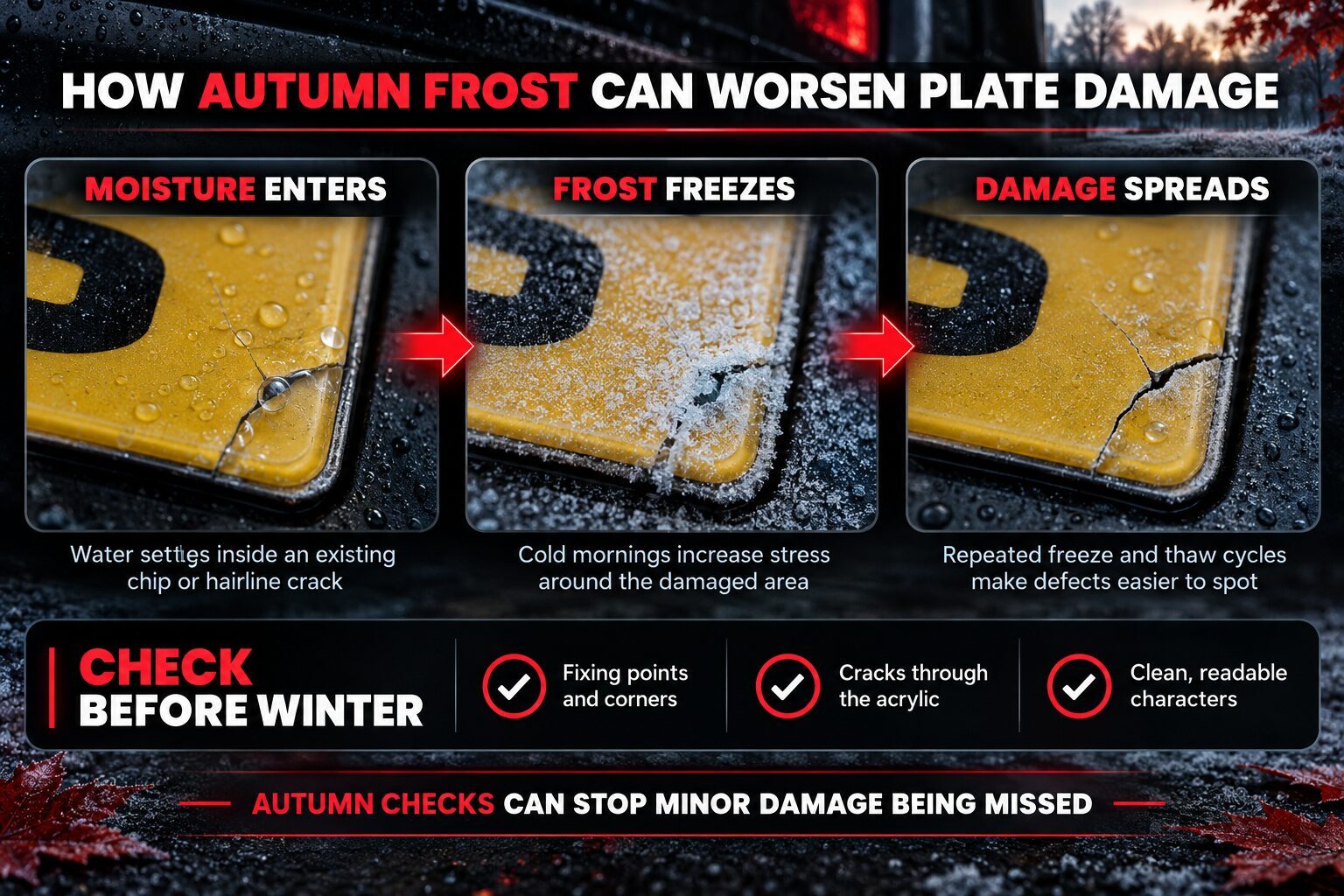
Repeated frost can increase stress around damaged areas, causing small defects to spread.
Moisture settling inside tiny chips or hairline cracks may freeze during colder mornings. As temperatures rise later in the day, the thawing process places repeated stress on weakened sections. Over several weeks, minor imperfections can become easier to spot.
Before winter arrives:
- Check both plates during daylight rather than relying on poor weather visibility.
- Look for chips around fixing points and corners.
- Ensure characters remain clean and clearly readable.
- Replace plates where cracks continue through the acrylic or reflective surface.
Carrying out these checks during autumn gives you time to deal with damage before freezing conditions become more frequent.
Autumn Sunlight Can Cause Gradual Fading and Discolouration
Although weaker than summer sun, prolonged UV exposure continues to contribute to gradual fading over time.
Vehicles parked outside throughout the year remain exposed to ultraviolet light regardless of the season. Autumn sunlight is less intense than midsummer, although cumulative exposure still affects materials over the life of the plate.
Fading usually develops gradually rather than appearing overnight. White reflective backgrounds may lose brightness, while black characters can appear less crisp once combined with scratches, dirt or general ageing.
Compare your front and rear plates during cleaning. Differences in colour, clarity or finish may indicate uneven weathering, particularly if one end of the vehicle spends more time facing direct sunlight.
More Frequent Cleaning Can Damage Plates When Done Incorrectly
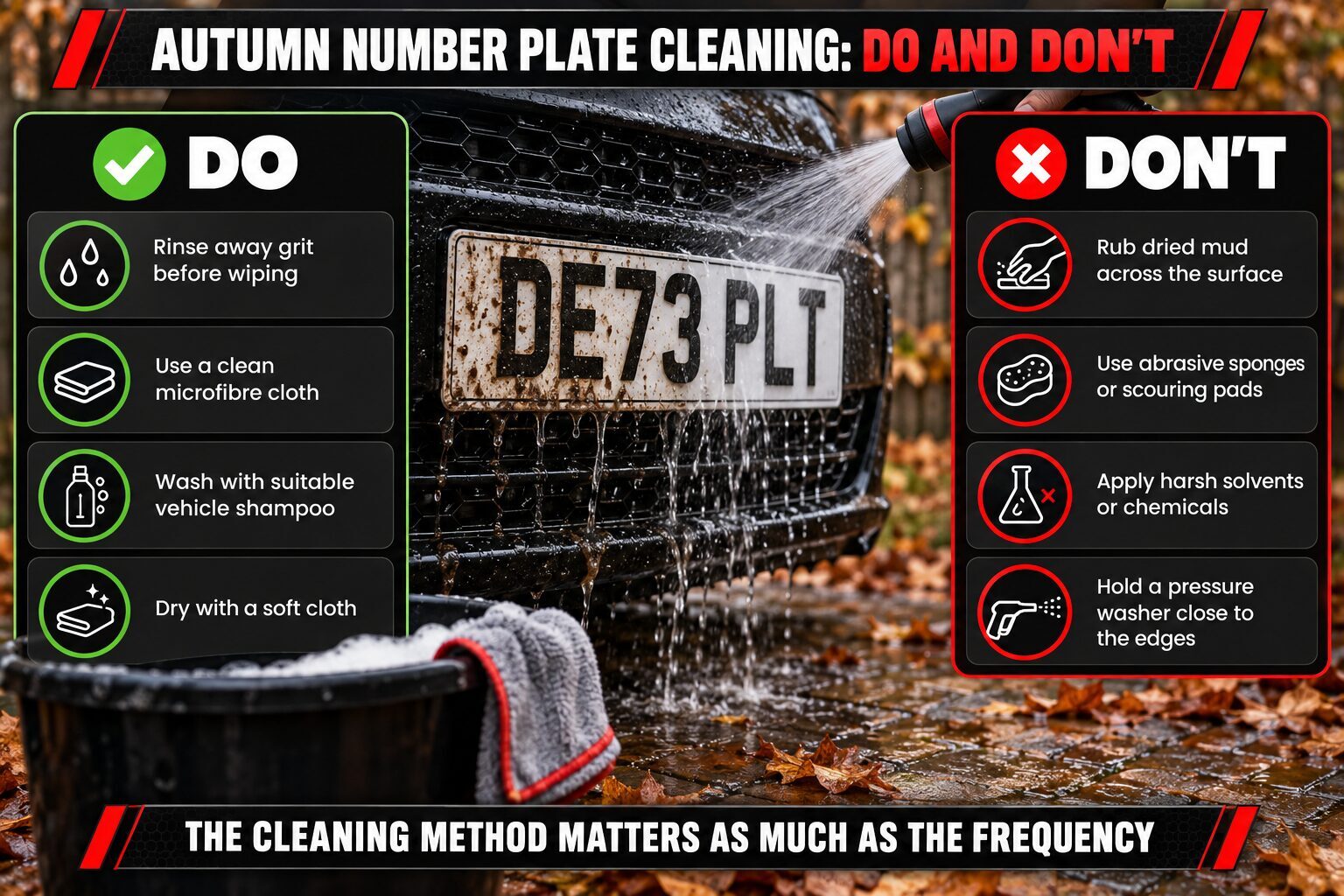
Autumn usually means more frequent washing, although incorrect cleaning techniques can create unnecessary scratches and wear.
Removing seasonal dirt helps preserve the appearance of your plates. The cleaning method matters just as much as the frequency. Abrasive cloths, harsh chemicals and aggressive pressure washing close to the plate can all contribute to cosmetic damage.
Do | Don't |
Rinse away grit before wiping | Rub dried mud across the surface |
Use a clean microfibre cloth | Use abrasive sponges or scouring pads |
Wash with a suitable vehicle shampoo | Apply harsh solvents or strong chemicals |
Dry the plate with a soft cloth | Hold a pressure washer close to the plate edges |
Cleaning cannot correct cracks, peeling, fading or delamination. Once damage affects readability or continues to worsen, replacing the plate is usually the more practical long-term solution.
Prepare Your Number Plates Before Winter Arrives
Autumn weather can turn minor imperfections into more noticeable damage if they are left unchecked. Regular inspections help you spot cracks, fading, scratches or lifting before winter conditions place additional stress on your plates.
Cleaning away mud, leaves and road grime also helps maintain visibility and appearance throughout the season. If maintenance is no longer enough, replacing worn or damaged plates before winter is a sensible step. You can explore suitable options using our number plate builder or contact us if you would like advice on choosing replacement plates that meet your needs.