



Car modification culture in the UK has grown steadily over the past decade, with enthusiasts refining everything from suspension setups to 3D number plates, and you can see that shift at car meets, track days and daily commutes alike.
Owners want vehicles that reflect their personalities and performance goals, yet confusion about car modification laws remains widespread.
Many drivers assume major engine swaps attract attention, whereas smaller styling tweaks pass unnoticed, yet insurers and enforcement bodies often take a broader view. Insurance disclosure, MOT inspections, emissions zones and roadside checks can all intersect in ways that feel unclear without a single reference point.
This guide sets out all of the general UK vehicle modification regulations in one place, covering legal car mods that UK motorists can fit confidently, areas that demand caution, and common traps that trigger fines or policy cancellation.
If you modify with the knowledge beforehand, declare changes properly and use compliant parts, you can customise your car and remain fully road legal.
Why Car Modification Laws Exist
Car modification rules exist for clear public reasons, and they connect safety, environmental protection and crime prevention in a framework that keeps roads predictable for everyone.
Road Safety Considerations
Road safety sits at the centre of UK car modification rules, as structural changes can affect braking, steering and stability in ways that are not always visible at first glance.
Regulators aim to prevent unsafe protrusions, weakened chassis components or altered suspension geometry that might compromise control during emergency manoeuvres.
Sharp edges on body kits, tyres fouling arches and poorly installed lighting can all increase risk to drivers, passengers and pedestrians, which explains why inspections focus on mechanical integrity rather than appearance alone.
Environmental and Emissions Control
Environmental standards shape what owners can change under the Road Vehicles Construction and Use Regulations, particularly around exhaust systems and emissions equipment.
Noise must not exceed what is considered acceptable for road use, and emissions systems such as catalytic converters and diesel particulate filters must remain functional.
Urban clean air zones, including Ultra Low Emission Zone schemes, assess compliance against set emissions standards, and modifications that alter engine output or remove emissions equipment can push a vehicle outside permitted limits.
Vehicle Identification and Crime Prevention
Vehicle identification rules protect against cloning and fraud, which explains the strict enforcement of number plate display laws and VIN integrity. Plates must follow prescribed font, spacing and material standards, making it easier for authorities to identify vehicles through ANPR systems.
Tampering with VIN plates or fitting non-compliant registration plates undermines enforcement and can attract immediate penalties, which is why display rules receive close scrutiny during roadside checks and MOT inspections.
What Counts as a Car Modification
Many drivers picture engine swaps or turbo upgrades when thinking about modifications, yet insurers and regulators define the term far more broadly. A modification refers to any change from the manufacturer’s standard specification, whether cosmetic, functional or performance-related.
Cosmetic adjustments can include:
- Body kits and spoilers
- Aftermarket wheels
- Window tints
- Lighting changes
- Replacement number plates
Performance alterations extend to remapping, exhaust systems, suspension adjustments and forced induction conversions.
Even small additions such as decals, upgraded brake components or different seat designs may fall within an insurer’s definition of “modified” under UK car insurance policies. If a change affects appearance, handling, value or performance, insurers usually expect disclosure.
Drivers sometimes assume minor styling tweaks fall outside reporting requirements, yet insurers assess risk on cumulative changes rather than single parts, which makes transparency vital.
Insurance Rules Around Modified Vehicles
Insurance remains one of the most significant legal considerations for modified cars, and nondisclosure can carry consequences far beyond a higher premium.
Declaring Modifications to Your Insurer
UK law requires drivers to provide accurate information when arranging cover, and that includes declaring all modifications. Insurers assess risk based on specification, meaning undeclared changes can invalidate a policy.
Even cosmetic changes such as upgraded wheels or custom plates may alter perceived risk, particularly if they affect vehicle value or attract theft attention.
How Modifications Affect Premiums
Premiums reflect perceived risk, and performance enhancements that increase acceleration or top speed tend to carry higher loading. Suspension changes, brake upgrades and cosmetic bodywork can shift pricing differently, depending on insurer appetite.
Some specialist insurers offer policies designed for enthusiasts, which can reduce friction when declaring multiple changes under modified car insurance UK schemes.
Consequences of Non-Disclosure
Failure to disclose modifications can result in policy voidance, meaning the insurer treats the contract as though it never existed. Claims may be rejected, and driving without valid insurance constitutes a criminal offence.
Penalties may include fines, points on a licence and vehicle seizure in severe cases, which highlights why accurate disclosure protects both finances and driving entitlement.
Exterior Modifications and Legal Limits
Exterior upgrades attract attention first, yet they sit under clear legal boundaries designed to balance style with safety.
Body Kits and Styling Changes
Aftermarket bumpers, splitters and wide arches must not create sharp edges or dangerous projections. Construction and Use Regulations require vehicles to avoid features likely to injure pedestrians.
Panels must be securely fitted, and modifications must not obscure lights, registration plates or reflectors.
Window Tints and Visibility Rules
Front windscreen and front side windows must meet minimum light transmission standards. The windscreen must allow at least 75% of light through, and front side windows must allow 70%.
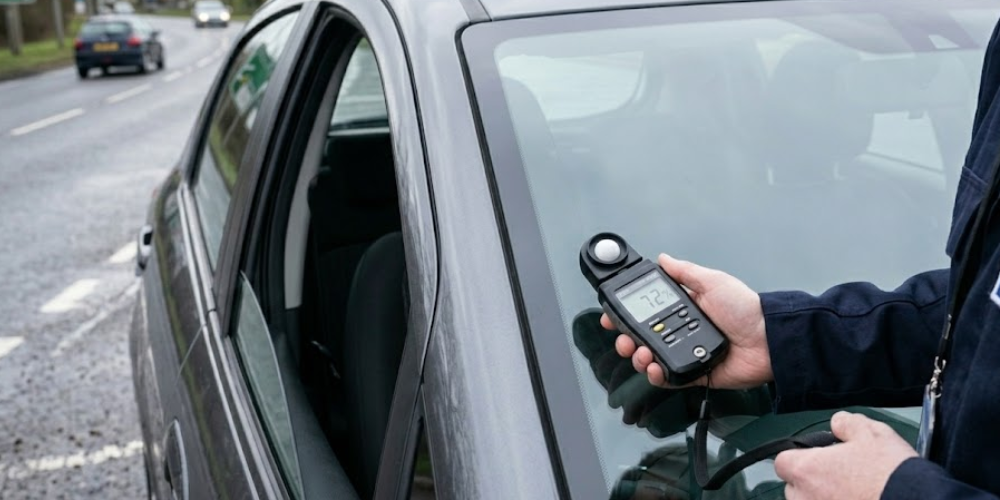
Rear windows may carry a darker tint, yet excessively dark film on front glass can trigger prohibition notices and immediate penalties.
Lighting Modifications and Restrictions
Lighting colour rules remain strict. Red lights must face the rear, and blue lights remain restricted to emergency services. Underglow lighting may be lawful if not visible directly and not distracting, yet flashing or coloured forward-facing lights risk enforcement.
Headlights must meet beam pattern and brightness standards, which means aftermarket HID or LED conversions must align with approval requirements.
Number Plates and Display Requirements
Number plate display laws specify the use of the Charles Wright font, correct spacing and compliant materials meeting BS AU 145 standards. Characters must not be altered, repositioned or stylised to resemble different letters or numbers.
Plates must display a supplier name and postcode, along with the relevant British Standard mark. Illegal spacing or tinted coverings can lead to fines and MOT failure.
Drivers seeking distinctive styling can choose road-legal options such as raised characters or subtle finishes, provided the layout remains compliant.
Demon Plates offers fully compliant options through its range of 3D number plates and 4D number plates, combining sharp presentation with lawful spacing and font standards.
Interior Modifications and Compliance
Interior upgrades can feel less exposed than exterior changes, yet they remain subject to safety-based UK vehicle modification regulations. Alterations inside the cabin must preserve occupant protection systems, driver control and structural mounting integrity. Removing factory components without maintaining equivalent safety standards can affect both MOT outcomes and insurance validity.
Enforcement may not focus on interior styling alone, yet defects that compromise restraint systems, warning indicators or steering operation can trigger failure during inspection. Insurers frequently treat interior changes as material modifications, particularly where they influence safety equipment or vehicle value.
Seats and Seatbelts
Aftermarket seats must be securely mounted using appropriate brackets and fixings suited to the vehicle’s structure. Seatbelts must remain correctly anchored and fully operational, with no fraying, locking faults or insecure mounting points.
If original seats contained integrated airbags or occupancy sensors, removal of these may show up on your dashboard warning lights, which can result in MOT failure.
Maintaining compatible restraint systems protects occupants and supports continued compliance under MOT rules for modified cars.
Steering Wheels and Controls
Aftermarket steering wheels often remove factory airbags, which increases risk and raises insurance considerations. Horn operation must remain functional, and steering response must not be restricted by poor installation.
Controls for indicators, lights and wipers must stay accessible and reliable, preserving safe operation on public roads.
Engine and Performance Modifications
Performance upgrades attract close inspection under UK vehicle modification regulations, particularly where output and emissions intersect.
Engine Remapping and ECU Changes
Engine remapping alters fuel delivery and boost pressure, potentially increasing power and torque. Insurers treat remaps as material changes, requiring a declaration.
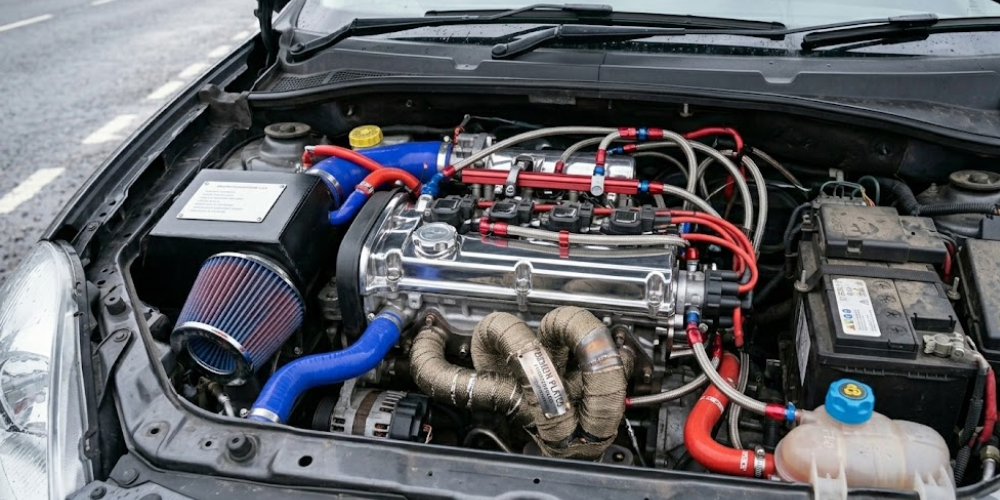
Altered calibration can affect emissions compliance, which may surface during MOT testing if readings exceed permitted limits.
Exhaust Systems and Noise Limits
Aftermarket exhausts must comply with Construction and Use Regulations, which require vehicles not to emit excessive noise. Systems described as louder than standard risk enforcement are deemed unreasonable for road use.
Removal of silencers or fitting straight through pipes typically attracts attention from roadside checks.
Turbochargers and Power Increases
Adding forced induction significantly changes engine output and stress levels. Structural components, brakes and drivetrain parts must support increased performance safely.
Insurers frequently adjust premiums for substantial power increases, reflecting higher risk exposure.
Suspension and Wheel Modifications
Suspension and wheel changes can transform stance and handling, yet they sit under clear legal expectations within UK car modification rules.
Adjustments must preserve safe steering, braking stability and predictable road behaviour. Excessive lowering or aggressive wheel fitment may look purposeful, yet legality depends on clearance, structural integrity and correct component specification.
Lowering and Ride Height Regulations
Lowering springs and coilover kits must maintain adequate clearance between tyres, arches and chassis components. During full steering lock and suspension travel, tyres must not contact bodywork or inner liners.
Vehicles must retain sufficient ground clearance for speed bumps and uneven surfaces, and suspension components must remain securely mounted. If ride height compromises steering geometry or causes instability, an MOT failure or prohibition notice may follow.
Wheel Size and Tyre Compatibility
Aftermarket wheels must not protrude beyond the wheel arches when viewed from above.
Tyres must carry the correct load and speed ratings for the vehicle’s weight and performance output. Incorrect offset, stretched tyre setups, or mismatched specifications can affect braking efficiency and handling balance. Inspectors will assess condition, tread depth and secure fitment during MOT testing, which makes precise measurement and professional installation a sensible approach.
Emissions and Environmental Regulations
Environmental compliance sits at the centre of UK vehicle modification regulations, and emissions standards often determine whether a modified car remains road legal.
Modern vehicles leave the factory calibrated to meet specific limits, and altering hardware or software can shift output beyond permitted thresholds. Drivers modifying engines, exhaust systems or intake components should assess how those changes affect regulated emissions and clean air zone classification.
Catalytic Converters and DPF Rules
Vehicles originally fitted with a catalytic converter or diesel particulate filter must retain those systems in working order. Removal or tampering constitutes an offence for road use, and MOT rules for modified cars require testers to confirm the presence of emissions control equipment where applicable. A missing or clearly altered unit results in automatic failure, and roadside inspections may lead to prohibition notices if defects are evident.
ULEZ and Low Emission Zone Impacts
Ultra Low Emission Zone (ULEZ) and other clean air schemes assess compliance against defined Euro standards. Engine remaps, or hardware changes that alter emissions performance, may affect a vehicle’s status within these zones.
Drivers should verify classification before entering restricted areas, particularly if performance upgrades modify factory calibration or exhaust configuration.
MOT Rules for Modified Cars
MOT inspections evaluate safety, structural integrity and emissions, regardless of styling ambition.
Common Reasons Modified Cars Fail MOTs
Frequent failure points include:
- Illegal window tints on the front glass
- Excessive exhaust noise
- Incorrect number plate spacing
- Exposed sharp edges on body kits
- Warning lights from removed airbags
What Testers Look For
Testers assess braking performance, steering components, suspension condition and emissions output. Structural corrosion, insecure modifications and tampered emissions systems attract scrutiny.
Preparation before testing reduces the risk of failure and unexpected rectification costs.
Police Enforcement and Roadside Checks
Police enforcement around modified vehicles tends to focus on visible defects, excessive noise and behaviour linked to anti-social driving, and officers often rely on experience when assessing whether a car appears compliant.
Roadside checks may follow routine patrol stops, organised operations or reports from members of the public, particularly in areas known for car meets.
If an officer identifies a defect, they may issue a Vehicle Defect Rectification Notice, which gives the driver a limited period to correct the issue and provide proof of repair. This approach often applies to matters such as illegal window tints, defective lights or incorrect number plate spacing under number plate display laws.
Section 59 warnings under the Police Reform Act 2002 can be used where a vehicle is driven in a manner causing alarm, distress or annoyance, and modified cars that attract complaints sometimes fall within this scope. A repeat incident within 12 months can lead to vehicle seizure.
In more serious cases, an immediate prohibition notice may be issued if a vehicle presents a clear danger, for instance, where tyres foul bodywork, brakes appear unsafe, or emissions equipment has been removed. The vehicle cannot be driven until faults are rectified and, in some circumstances, inspected again.
Enforcement increasingly uses ANPR systems to flag vehicles linked to invalid insurance or previous offences, which means undeclared modifications can surface quickly during roadside checks.
Penalties for Illegal Modifications
Penalties for breaching UK vehicle modification regulations can escalate quickly, and enforcement bodies often apply sanctions based on severity and intent. Minor infringements, such as incorrect number plate spacing or slightly excessive window tint, may attract fixed penalty fines, typically accompanied by a requirement to rectify the issue within a set timeframe.
More serious breaches, including driving with invalid insurance following non-disclosure of modifications, carry heavier consequences. If an insurer voids a policy, the driver may be treated as uninsured, which can lead to six to eight penalty points, a substantial fine and increased future premiums.
Excessive exhaust noise, removal of emissions equipment or unsafe structural alterations can result in prohibition notices, preventing the vehicle from being driven until compliant. Continued use of a prohibited vehicle may trigger court proceedings.
In extreme cases, particularly where a vehicle is linked to anti-social behaviour or repeated offences, police may seize the vehicle. Recovery and storage fees apply, and failure to reclaim the car within the prescribed period can lead to disposal.
Financial cost, licence points and long-term insurance impact often outweigh the perceived benefit of an illegal modification, which makes compliance a far safer investment.
How to Modify Your Car Legally
Drivers who approach changes with structure and patience tend to avoid most legal pitfalls, and a methodical plan often protects both budget and driving record.
- Research UK vehicle modification regulations before purchasing any component. Check whether the part affects emissions, lighting, structural integrity or number plate display laws, and review relevant guidance from official sources.
- Select parts clearly designed for road use rather than track-only applications. Components marketed for off-road or motorsport settings may fall outside legal car mods UK standards, which can create problems during MOT inspections or roadside checks.
- Declare every modification to your insurer, including cosmetic alterations. Transparent communication supports valid modified car insurance UK cover and reduces the risk of policy voidance later.
- Keep receipts, installation records and product certifications. Documentation can help demonstrate compliance if questions arise during enforcement or resale.
- Use registered suppliers for registration plates. Choosing compliant 3D or 4D options that meet British Standard requirements allows you to personalise your vehicle without breaching display regulations.
A careful, informed approach keeps creativity intact while maintaining full road legality.
Staying Legal and Insured
Car modification laws in the UK set clear boundaries, yet they do not prevent individuality when you act with awareness and discipline. Drivers who understand how UK car modification rules apply in practice can refine styling and performance without drifting into unnecessary risk.
Compliance starts with mindset. Every change, whether cosmetic or mechanical, should prompt a simple check: Is this road legal and properly declared? Insurers assess vehicles on their exact specification, and full disclosure under a modified car insurance policy protects you from rejected claims or sudden cancellation.
Regular checks matter too. Lighting, plate condition, tyre fitment and emissions equipment can shift slightly over time, especially after further upgrades. Small issues, like marginal tyre protrusion or damaged registration plates, can attract attention during roadside checks.
Keep documentation close. Invoices, fitting records and product certifications show that your vehicle meets UK vehicle modification regulations and help resolve questions quickly if they arise.
If number plate styling forms part of your build, stick to number plate display laws and choose a supplier that follows British Standard requirements. Demon Plates provides compliant 3D and 4D registration plates that meet current regulations, so you gain a sharp finish without risking fines or MOT failure.
Responsible modification blends creativity with compliance, keeping both your car and your insurance exactly where they should be.