



Number plates sit in plain sight, yet many drivers tend to overlook their condition during routine vehicle upkeep. A plate may look acceptable at a glance, though closer inspection might reveal wear that affects legality or clarity. This creates a common question, renew vs replace number plate, which many drivers face before an MOT or resale.
Minor wear may appear manageable, though deeper damage can lead to compliance issues or test failure. A worn plate may reduce visibility, which affects both safety and roadworthiness. This guide sets out a clear path, helping you assess condition, cost, and long-term value before deciding what action suits your vehicle.
When Renewing a Number Plate Makes Sense
A number plate with light wear may still perform well, provided the structure remains intact and markings stay clear. Small fixes can restore appearance and improve fit without replacing the entire plate.
- Replacing missing or worn screw caps to secure the plate firmly
- Cleaning away dirt, grime, or road residue to restore clarity
- Reapplying adhesive pads where the plate has loosened
- Adjusting minor fitting issues where no physical damage exists
These actions suit plates that remain structurally sound and fully readable. A quick inspection should confirm no cracks, fading, or missing markings before choosing this route.
When Replacing a Number Plate Is the Better Option
A plate showing deeper wear tends to fall below legal standards, which makes replacement the safer and more reliable option. Damage affecting structure or readability cannot be corrected through minor fixes.
- Cracks or chips across the plate surface
- Fading or discolouration that reduces contrast
- Delamination or bubbling within the reflective layer
- Missing legal markings such as the BS standard or supplier details
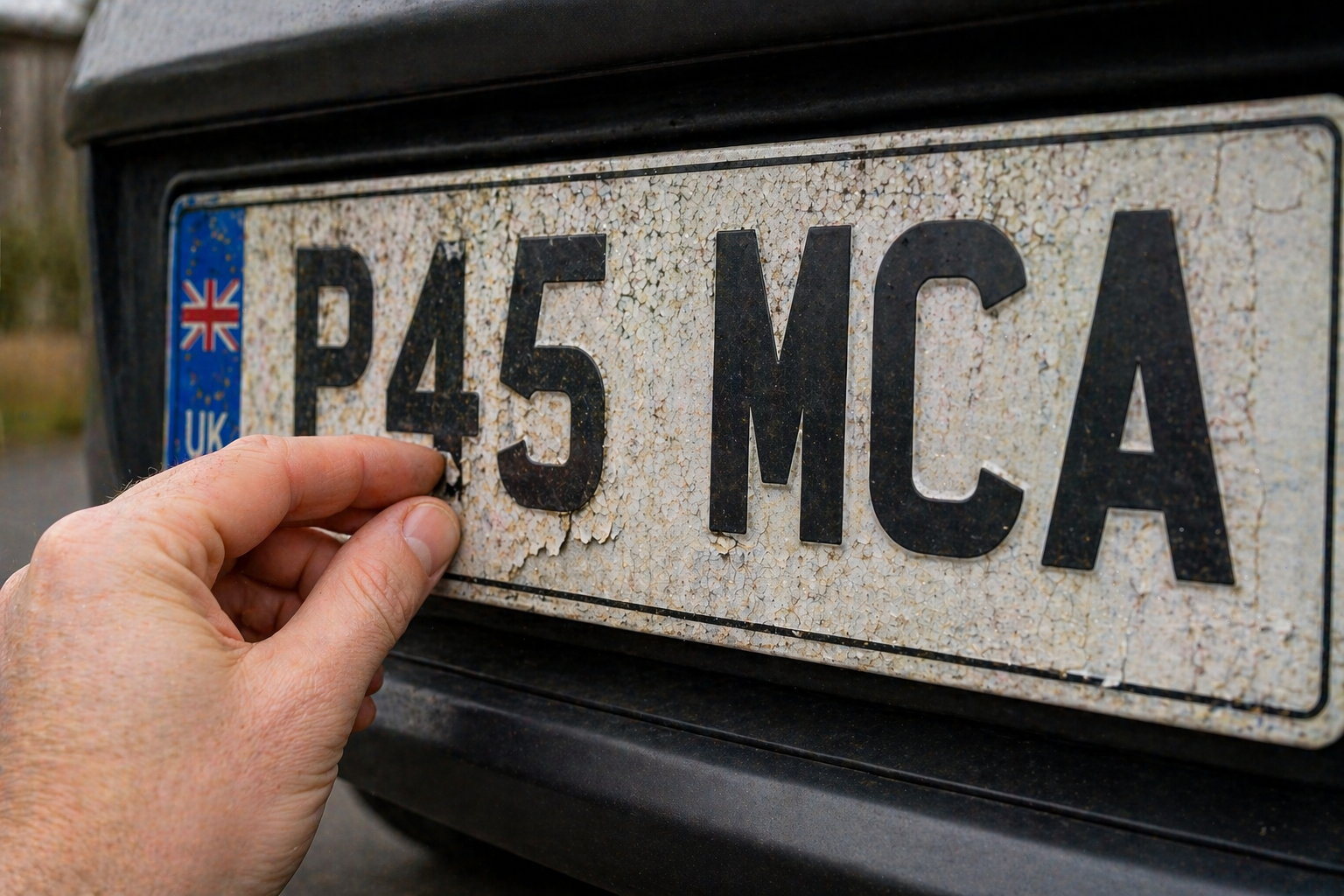
Each issue affects visibility or compliance, which may lead to MOT failure. A replacement plate restores both appearance and legal standing without further risk.
Comparing the Condition of Your Current Number Plate
A clear assessment starts with visibility. Stand several metres away and check whether characters remain sharp and easy to read. Any strain during this check may point to fading or surface wear.
Next, examine the plate’s structure. Flexing, brittleness, or cracks suggest material breakdown, which signals limited lifespan. Legal compliance requires visible BS markings and supplier identification, which should remain intact and legible.
Irreversible damage includes deep cracks, peeling layers, or widespread discolouration. These signs indicate that repair will not restore full function, making replacement the more dependable option.
Comparing Cost and Long Term Value
Minor fixes carry a low upfront cost, though repeated adjustments may build over time. Adhesive pads, fittings, and cleaning products offer short-term improvement, yet they do not extend the life of a deteriorating plate.
A full replacement involves a higher initial spend, though it provides durability and consistent performance. The cost of new number plates UK drivers pay remains relatively modest compared to potential MOT retest fees or fines linked to non-compliance.
Investing in a new plate reduces the need for repeated maintenance. It supports long-term reliability, which offers better value across the lifespan of the vehicle.
Comparing Appearance and Vehicle Presentation
A clean, well-fitted number plate supports the overall look of a vehicle. Faded or damaged plates draw attention for the wrong reasons, which can affect perceived care and value.
Drivers preparing a car for sale may notice how small details influence buyer perception. A fresh plate improves presentation, which may contribute to stronger offers or quicker interest.
For van owners or business users, plate condition reflects brand image. A worn plate may suggest neglect, whereas a clear, compliant plate supports a professional appearance.
Comparing Legal Compliance and Roadworthiness
UK regulations set clear standards for number plate condition and readability. Characters must remain visible at all times, with no obstruction or distortion. Any attempt to repair damage may fail to meet MOT number plate rules.
DIY fixes, such as patching cracks or covering wear, risk reducing clarity. These approaches may lead to inspection failure or enforcement action. A compliant plate must display correct markings and maintain consistent visibility.
Replacing a damaged plate removes uncertainty. It supports full compliance and helps maintain roadworthiness without relying on temporary fixes.
Signs It Is Time to Stop Repairing and Fully Replace
Some conditions clearly indicate that repair no longer offers a viable solution.
- Deep cracks running across characters
- Peeling or lifting reflective backing
- Reduced readability from fading or wear
- Brittle material showing signs of ageing
Each of these points reflects structural decline, which cannot be reversed through maintenance. Replacement restores both safety and compliance.
How to Decide Which Option Is Right for Your Vehicle
Decision-making starts with a direct comparison between condition and expected lifespan. A plate with surface wear but intact structure may still perform with minor upkeep.
Older plates showing multiple signs of wear may require replacement to maintain reliability. Consider how long the current plate will remain compliant under regular use.
Balancing cost against durability helps guide the decision. A short-term fix may suit newer plates, whereas long-term reliability favours replacement where damage is more advanced.
Choosing a Quality Number Plate Supplier
A reliable supplier plays a key role in maintaining compliance and durability. Plates must meet British Standards and include correct identification markings.
High-quality materials resist fading, cracking, and delamination, which extends lifespan and reduces future maintenance. Drivers seeking dependable replacement number plates can expect products built to meet legal requirements and withstand regular use.
A trusted supplier provides clear guidance, helping drivers choose the right option for their vehicle. For further support or tailored advice, drivers can contact us at Demon Plates and explore suitable solutions with confidence.