



A personalised registration does not necessarily disappear when the person with the right to use it dies. An executor or someone who left the number in the person’s will can deal with it through DVLA.
Before selling the vehicle or moving the registration, establish whether the number remains assigned to the vehicle or is held on a V778 retention document or V750 certificate of entitlement. This guide explains who can deal with the registration, the documents required and the options available next.
What Happens to a Personalised Registration After Someone Dies?
If the person with the right to use a personalised registration dies, DVLA provides a process for dealing with the number. An executor or someone left the number in the will may keep, transfer or give up the right to use it.
The registration is separate from the physical number plates fitted to the vehicle. Possessing those plates does not provide authority to display the registration elsewhere.
When dealing with personalised number plates, the available options include:
retaining the registration
transferring it to an eligible vehicle
putting it into another person’s name
selling the registration
Is the Personalised Registration Still Assigned to the Deceased Person’s Vehicle?
First, check whether the registration remains assigned to the deceased person’s vehicle or is held separately. DVLA uses different processes for each situation.
If the number remains on the vehicle, it is an assigned registration and may need dealing with before the vehicle is sold.
If it has already been removed, look for a V778 retention document or V750 certificate of entitlement.
Registration assigned to the vehicle: follow DVLA’s process for an assigned private number.
Registration on a V778 or V750: follow the relevant process for a registration held separately.
Check the registration status before taking further action.
Who Can Deal With the Personalised Registration?
DVLA provides a process for an executor or someone left the personalised number in the deceased person’s will. Possessing the vehicle, V5C or physical plates does not establish the right to deal with the registration.
Where several executors are involved, DVLA may require a covering letter signed by all executors confirming agreement with the application.
An administrator may be involved where there is no will. If entitlement to the registration is disputed, seek professional legal advice before attempting a transfer or sale. Establishing who has authority first helps ensure the correct person completes the relevant DVLA process.
What Documents Does DVLA Need?
DVLA requires evidence of the death and the applicant’s authority to deal with the personalised registration. Current guidance requires the death certificate, original or certified copy, plus at least one of:
a certified copy of probate
a copy of the will
a solicitor’s letter confirming the executors or next of kin
The remaining paperwork depends on the registration’s status.
Assigned to a vehicle: DVLA currently directs applicants to form V317 with supporting documents.
Held separately: the V778 or V750 and relevant evidence are required.
Check current DVLA requirements before submitting an application.
Can You Keep the Personalised Registration?
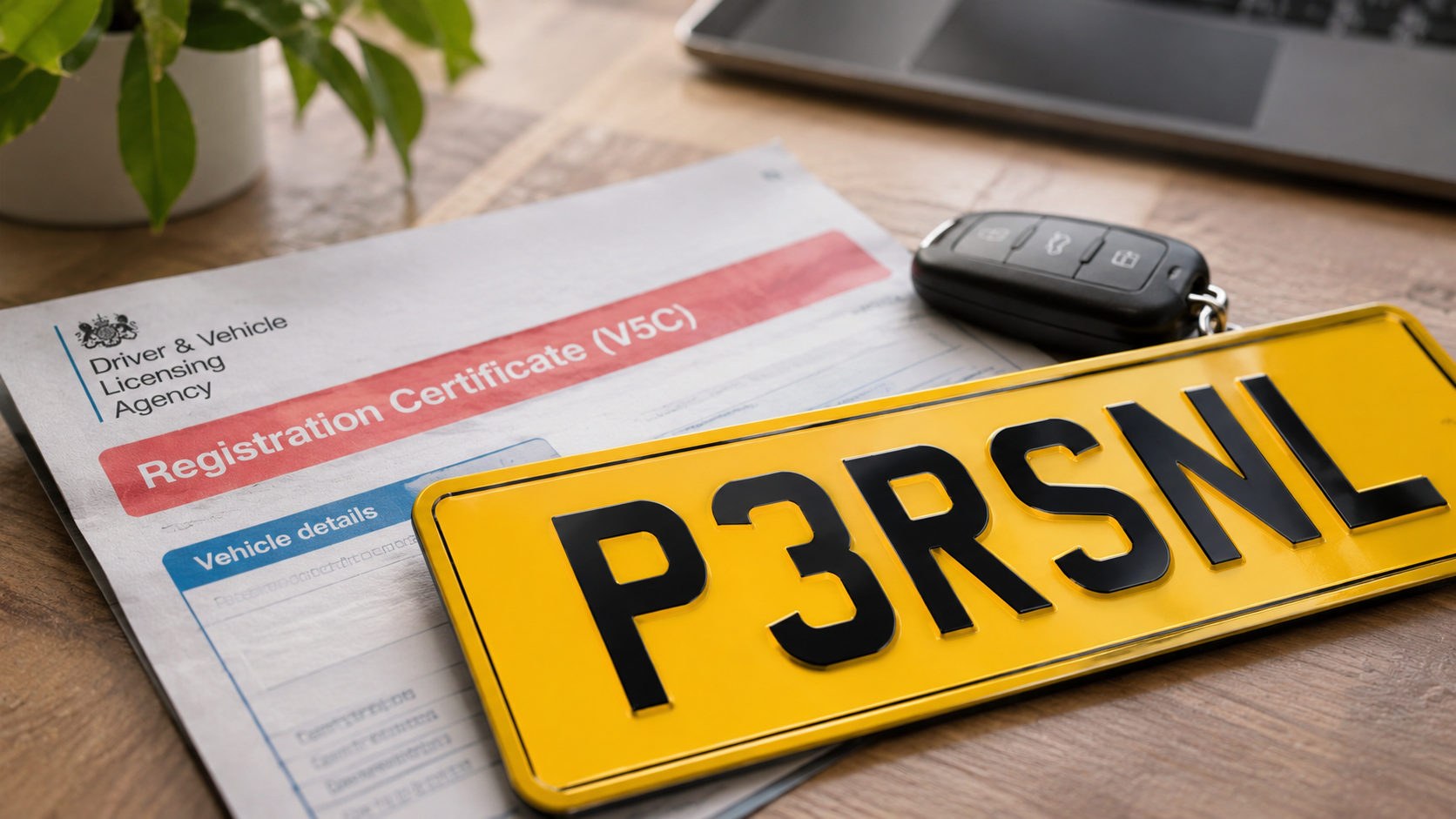
Yes. A personalised registration can potentially be kept after the person with the right to use it dies, provided the appropriate DVLA process is followed.
Retention is useful when the family wants to preserve the registration without immediately assigning it to another vehicle.
If the number remains assigned to the deceased person’s vehicle, follow DVLA’s process for removing and retaining it. A different route applies when it is already held on a V778 or V750.
Our guide to putting a number plate on retention explains the process in more detail.
Can the Registration Be Transferred to a Beneficiary or Another Vehicle?
A personalised registration can potentially be transferred to another person or assigned to an eligible vehicle through DVLA. Being named as a beneficiary does not automatically allow someone to fit the existing plates to their car.
First, establish who has authority to deal with the registration. The number must then be correctly transferred and assigned to the receiving vehicle, which must meet DVLA eligibility requirements.
Once DVLA confirms the assignment, the correct physical plates can be fitted.
Our guide to transferring a private number plate explains the process in more detail.
Can a Personalised Registration Be Sold After Someone Dies?
A private registration can be sold after someone dies, provided the person handling it has the authority and required DVLA documentation. Establish these points before advertising or arranging a transfer.
The value lies in the right to use the registration, not the physical plates removed from the vehicle. Avoid assuming every personalised registration has significant resale value.
If selling is the preferred option, our guide explains how to sell a number plate. You can also explore the factors affecting what a number plate might be worth.
What Happens if the Vehicle Is Being Sold?
If the deceased person’s vehicle is being sold and the personalised registration is meant to be kept, deal with the registration first. GOV.UK states that DVLA must be told separately if you want to keep a personalised registration, and this should happen before the vehicle is sold.
The practical order is:
Personalised registration first. Vehicle sale second.
Selling the deceased person’s vehicle has a separate DVLA bereavement process. Do not treat the vehicle sale and retention of its registration as one procedure.
For example, an executor may have found a buyer while the family wants to retain the registration for sentimental reasons. Complete the appropriate registration process before progressing with the sale.
This order protects the family’s intention to retain the number. Check the registration’s status, complete the required DVLA steps and receive the relevant documentation before proceeding with the vehicle sale.
What if the Family Is Keeping the Vehicle?
If someone keeps the deceased person’s vehicle, DVLA must be informed about the new keeper. The vehicle must also be taxed in the new keeper’s name before it is used on a public road.
Vehicle tax does not transfer from the deceased keeper. The person keeping the car needs to arrange the required tax and insurance before driving it.
Keeping the vehicle does not automatically resolve every question concerning its personalised registration either. Vehicle keeper details and the right to deal with a private registration are distinct issues.
If the intention is to leave the registration on the vehicle, check the applicable DVLA requirements as part of dealing with the vehicle and estate rather than assuming possession of the car settles the registration position.
What Should You Do First With a Personalised Registration After Someone Dies?
Before selling, transferring or making changes to the vehicle, establish the registration’s status, identify who has authority to deal with it and gather the evidence DVLA requires.
Use this order:
Check where the registration is held. Establish whether it remains assigned to the vehicle or is represented by a V778 or V750.
Identify who has authority. Check the executor arrangements, will and relevant estate documentation.
Gather the required evidence. Prepare the death certificate and supporting documentation requested by DVLA.
Choose what happens next. Decide whether the registration should be retained, transferred, put into another person’s name or otherwise dealt with.
Complete the appropriate DVLA process. Follow the route for the registration’s current status.
Deal with the vehicle afterwards. Where the registration needs to be kept, complete this step before selling the vehicle.
Arrange physical number plates when required. Once a registration has been correctly assigned to another vehicle, make sure the vehicle displays the appropriate plates before driving it.
Taking these steps in the correct order keeps the focus on the registration rather than the pieces of acrylic attached to the car.
Once the personalised registration has been correctly assigned to a vehicle, you can arrange the physical number plates needed to display it by building your number plate.