



Confusion around trailer number plate law is common across UK roads, particularly for drivers who tow as part of their daily operations. Non-compliance can result in fines, failed roadside checks, and disruption to work schedules.
The rules themselves are clearly defined, but gaps in understanding often lead to avoidable mistakes. This guide provides a structured explanation of UK requirements, helping drivers confirm what must be displayed and how to remain fully compliant when towing a trailer.
Why Trailer Number Plate Laws Matter
Trailer number plate regulations support identification, enforcement, and road safety.
- Legal identification links the trailer directly to the towing vehicle
- ANPR systems rely on accurate plates to detect offences and monitor compliance
- Clear visibility supports accountability in the event of incidents
For van owners and fleet managers, maintaining compliance reduces the risk of penalties and operational delays.
When a Trailer Needs a Number Plate
A trailer must display a number plate when it obscures the rear plate of the towing vehicle. This applies across a range of setups used for both private and commercial purposes.
Examples include:
- Caravans
- Utility trailers
- Equipment carriers
- Bike racks that block the vehicle’s registration
The UK does not require separate registration for standard trailers. Responsibility remains with the towing vehicle, making it essential to check visibility before each journey.
What Number Should Appear on a Trailer Plate
A trailer number plate must display the exact same registration as the towing vehicle. This requirement applies at all times without exception.
- No substitutions are permitted
- Temporary or handwritten alternatives are not valid
- All characters must match in format and spacing
Failure to display the correct registration is a direct breach of trailer number plate law and may lead to penalties.
Drivers operating multiple vehicles should verify that the correct plate is fitted before towing. For international travel, additional registration requirements may apply depending on the destination, but within the UK, the rule remains fixed.
Rules on Number Plate Visibility for Trailers
Visibility standards ensure that trailer plates can be read clearly in normal driving conditions.
- Plates must be clearly visible and unobstructed at all times
- The plate must be positioned vertically or close to vertical
- Characters must be readable from a reasonable distance
Obstructions such as cargo, fittings, or accessories must not block any part of the registration. Dirt, wear, or damage can reduce clarity and may result in non-compliance during inspections.
Spacing, Font, and Readability Requirements
UK law requires number plates to follow a standardised format to maintain consistency and readability.
- The Charles Wright font must be used
- Character spacing must follow prescribed measurements
- Group spacing must remain consistent and unaltered
Stylised fonts, decorative elements, or altered characters are not permitted. Plates must be produced using approved reflective materials to maintain visibility in varying light conditions.
Any deviation from these standards can result in the plate being deemed illegal.
Lighting Requirements for Trailer Number Plates
Trailer number plates must be illuminated during hours of darkness to remain legally compliant.
- Lighting must make the full registration clearly visible
- Illumination connects through the trailer’s electrical system
- Lights should be positioned to avoid shadowing or obstruction
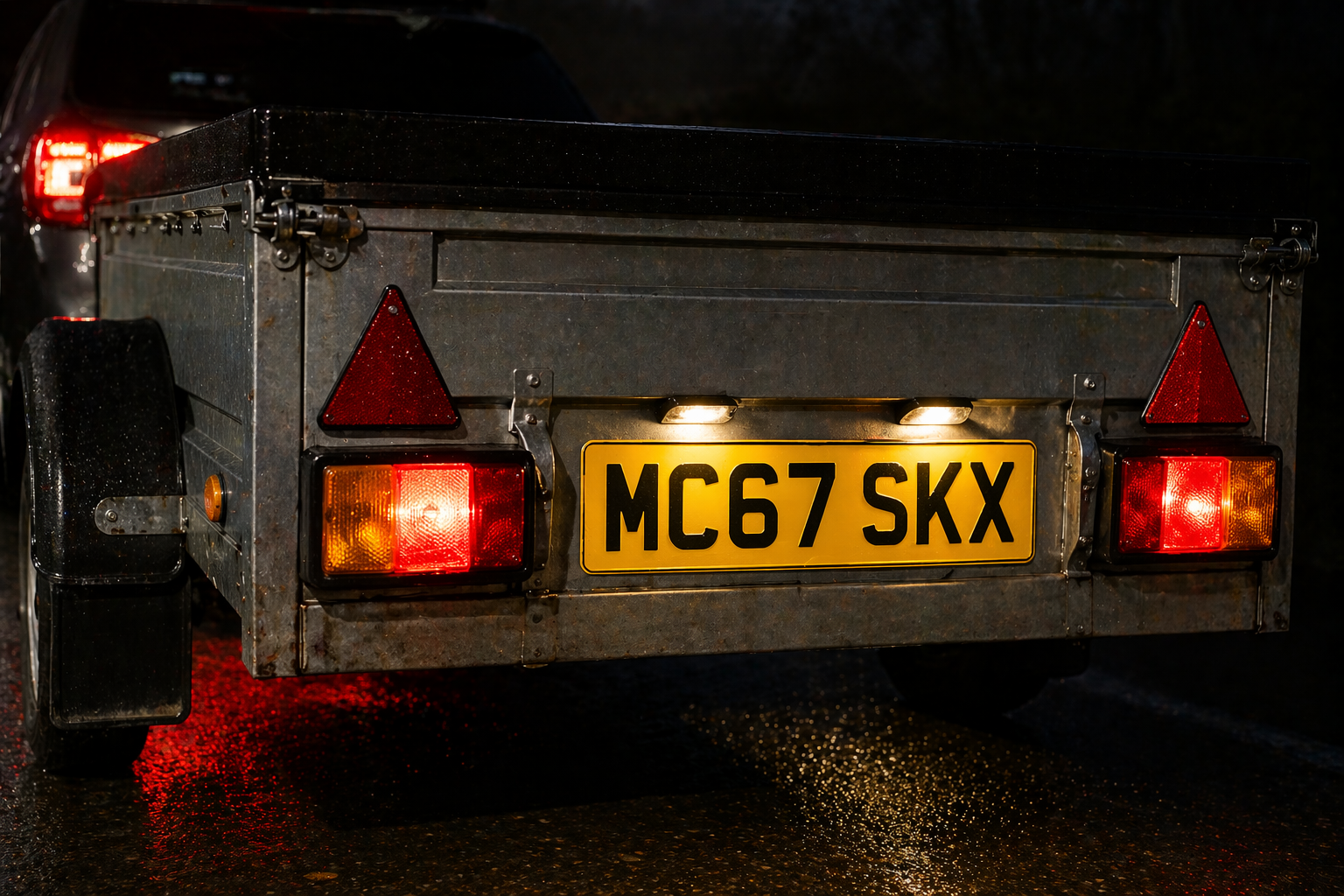
Excessive glare must be avoided, as it can reduce readability. Faulty bulbs or wiring issues may lead to a breach of trailer lighting requirements, making pre-journey checks necessary.
When a Trailer Plate Could Be Considered Illegal
A trailer number plate may be considered illegal if it fails to meet UK standards for design, condition, or display.
- Handwritten or homemade plates
- Plates that are dirty, cracked, faded, or damaged
- Incorrect font, spacing, or formatting
- Non-reflective or unapproved materials
A plate that becomes loose, bent, or detached during use may also be classed as non-compliant. Regular inspection reduces the likelihood of these issues leading to penalties.
Common Mistakes Drivers Make With Trailer Number Plates
Several common errors increase the risk of non-compliance.
Drivers may forget to change plates when switching between vehicles, resulting in mismatched registrations. Plates sourced from non-compliant suppliers can fail to meet legal standards from the outset.
Installation issues are another frequent problem. Poor fixing can cause plates to shift or detach during travel, affecting visibility and legality.
Fleet operators managing multiple vehicles face a higher risk of these errors and should implement consistent checking procedures.
How to Make Sure Your Trailer Plate Meets UK Rules
A structured approach helps maintain compliance across all journeys.
- Purchase from a registered supplier
- Confirm BS AU 145e compliance
- Check plate visibility before each journey
- Secure the plate to prevent movement or loss
- Ensure the registration matches the towing vehicle exactly
Routine checks reduce the likelihood of fines and support safe, lawful towing.
Choosing a Road Legal Number Plate for a Trailer
Selecting a compliant plate is essential for vehicles exposed to regular road use. Durability plays a key role where trailers face weather, debris, and frequent handling.
A high-quality Demon Plates trailer number plate supports long-term compliance and reduces the need for replacement. Plates manufactured to UK standards provide consistent readability and reliability under daily use conditions.
Drivers requiring guidance or replacement plates can contact us to confirm suitable options. Working with a compliant supplier helps maintain legal protection and reduces the risk of disruption during roadside checks.