



Some cars have square number plates because their bodywork, mounting recess or original market design suits a shorter, taller plate instead of the familiar UK oblong format. This is particularly relevant for certain imported and specialist vehicles.
Plate shape is only part of the decision. A road plate must still display the registration correctly and meet the relevant UK requirements. If you are replacing a plate or considering a different format, check the vehicle's available mounting space before choosing a suitable replacement.
The Vehicle Has a Square Number Plate Recess
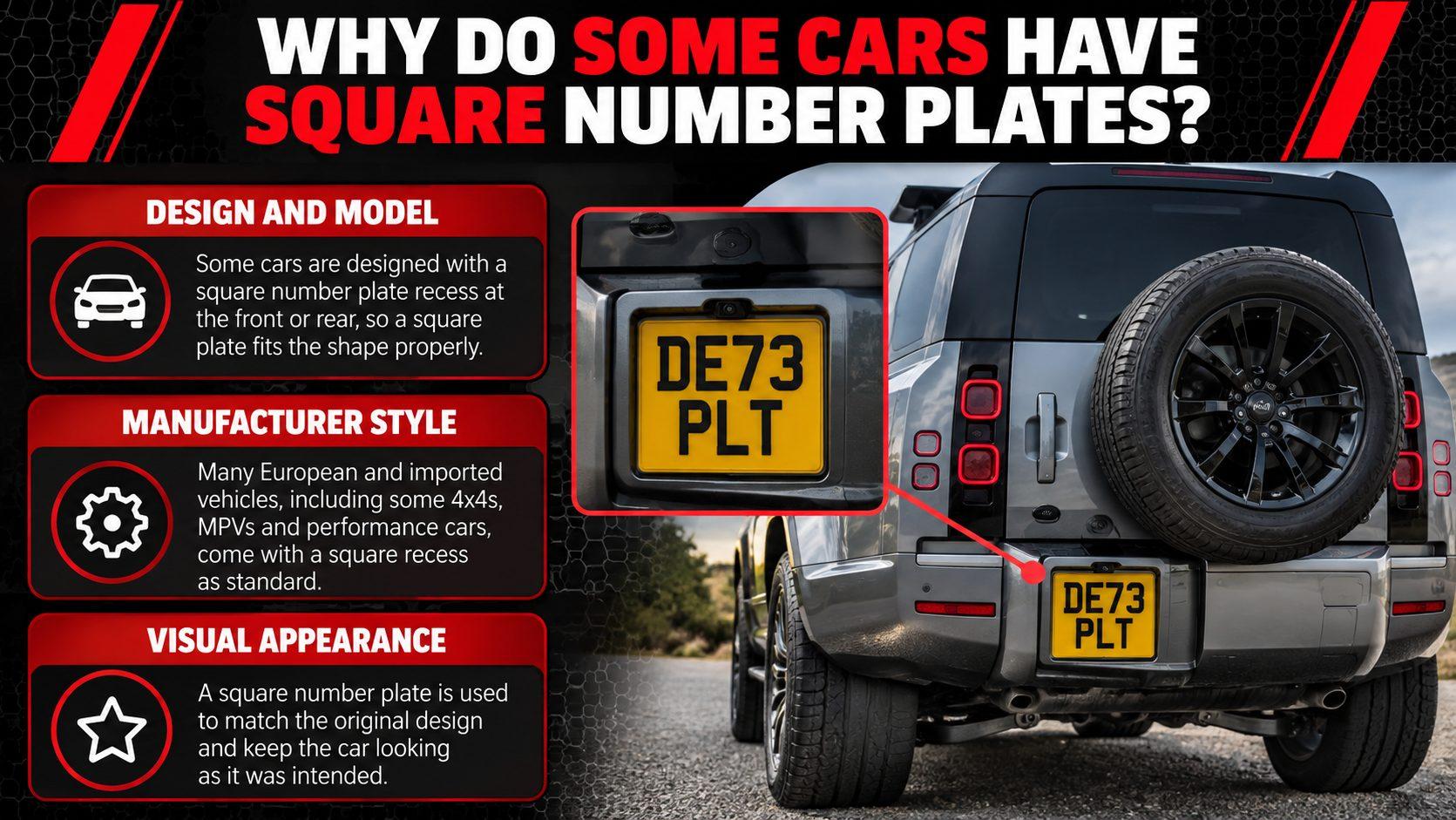
Some cars have a square number plate because the manufacturer has provided a shorter, taller mounting recess instead of a wide space for a conventional oblong plate.
Look at the bumper or tailgate and you may find a clearly defined area for the registration. Its dimensions, fixing points and surrounding bodywork give a useful indication of the format the vehicle was designed to accommodate.
This becomes particularly important when replacing a cracked, peeling or damaged plate. Ordering a standard oblong replacement without checking the recess first can leave you with a plate poorly suited to the available mounting area.
Measure the existing plate and recess before ordering. Check the usable width and height, fixing position and clearance around the edges. Our number plate size guide provides more detail on the formats you may encounter.
The aim is to choose an appropriate plate format while preserving the correct registration display. A restricted recess is not permission to squeeze characters together or alter their arrangement to make them fit.
Imported Cars May Be Designed for a Different Plate Format
Imported vehicles can have registration mounting areas designed around the plate formats used in their original market. A shorter, taller UK plate may therefore suit the available space better than a conventional oblong design.
This can apply to Japanese or US-market vehicles with rear recesses shaped differently from those on many UK-market cars. The vehicle's construction matters here, rather than its imported status alone.
UK regulations include specific provisions for certain imported vehicles where their construction leaves insufficient space for a standard-sized registration plate. These provisions have defined conditions, which means an import does not automatically qualify for a different format.
Before ordering a replacement, inspect the mounting area, measure the available space and check how the registration needs to be displayed. Our guide to the types of UK number plates provides useful context on the formats drivers may encounter when choosing a suitable replacement plate for their vehicle.
Bodywork, Lights and Vehicle Components Can Limit Plate Space
A vehicle's complete rear-end design can restrict the horizontal space available for a registration plate. The recess itself is only one part of the fitment check.
Features worth inspecting include:
tailgate handles and opening mechanisms
rear lights positioned close to the registration area
spare-wheel carriers
bumper shapes and mouldings
cameras, sensors or other fitted components
existing fixing holes and mounting points
A specialist vehicle or 4x4, for example, may have several components competing for space around the registration area. A shorter plate format can make more practical sense where the vehicle has been designed to accommodate one.
Do not judge fit using width alone. Check whether the plate can sit securely, remain clearly visible and avoid interfering with nearby components. Poor placement can turn the right plate format into the wrong installation.
Why Are Some Registrations Displayed Across Two Lines?
A square-style registration plate can use a taller layout, allowing the registration to be displayed across two lines instead of extending across one long horizontal plate. UK MOT guidance recognises single-line and two-line registration plate formats for cars.
The key distinction is between using a permitted plate layout and manipulating the registration itself.
You cannot move letters and numbers closer together simply to make a registration fit a smaller space or resemble a name or word. Registration marks must use the required character dimensions and spacing applicable to the vehicle and plate.
That matters when buying a personalised registration too. A combination may look attractive on paper, yet its legal display is governed by the same rules as other registrations. The mounting area does not override character and spacing requirements.
If a two-line format is being considered because your vehicle has limited mounting space, check the correct specifications before ordering rather than attempting to make a conventional layout fit by altering the characters.
Are Square Number Plates Legal in the UK?
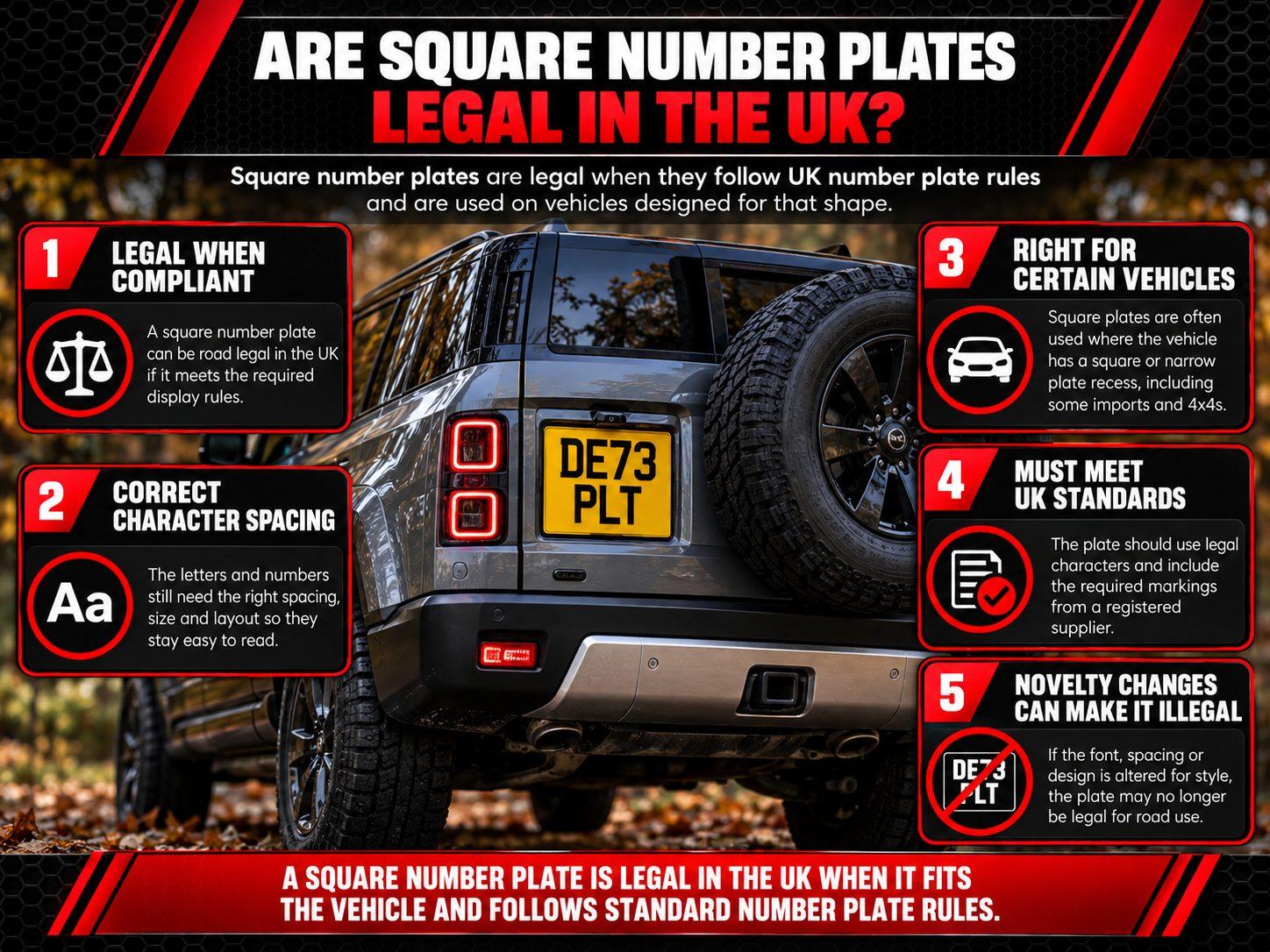
A square shape does not by itself decide whether a number plate is road legal. The finished plate and registration display must meet the requirements applying to the vehicle.
For a modern road plate, checks include:
reflective plate material
black registration characters
a white background at the front and yellow background at the rear
no background pattern
correct character dimensions and spacing
the required supplier details
the applicable British Standard marking
a clear, correctly displayed registration
For plates fitted after 1 September 2021, GOV.UK identifies BS AU 145e as the applicable British Standard. Current guidance also requires characters on these plates to be a single shade of black.
Incorrect registration display can have practical consequences. GOV.UK states that drivers can face a fine of up to £1,000 and an incorrectly displayed plate can result in MOT failure.
Our guide to UK number plate laws covers the wider compliance points worth checking before changing your plates.
A compact mounting area never makes altered spacing acceptable. Fitment and legality need to work together.
Should You Choose a Square Number Plate for Your Car?
Consider a square-format plate when it suits the vehicle's mounting area and the registration can be produced and displayed in accordance with the rules applying to your vehicle.
Before ordering, work through four checks:
Inspect the existing plate. Record its dimensions, layout and fixing position before removing it.
Measure the mounting area. Check available width, height and clearance around bodywork, lights and other components.
Consider the vehicle's origin. An imported vehicle may have been designed around a different registration format, although import status alone does not determine which rules apply.
Check the finished specification. Confirm the character layout, spacing, materials and required markings rather than judging suitability from the outer plate shape alone.
Replacing an existing square plate and changing from an oblong format are different decisions. In either case, start with fitment and compliance before considering appearance.
Once you know the size and format your vehicle needs, read our guide on where to get number plates made or explore Demon Plates' plate options to choose a suitable design for your vehicle and intended use.