



Peeling edges, faded characters or small cracks in your number plate are more than cosmetic issues. They affect how clearly your registration can be read and whether your vehicle meets legal display standards.
Many drivers notice early wear and delay replacing the plate, assuming it is harmless.
In reality, damaged plates rarely improve on their own. What starts as a small lifted corner or faded edge often spreads quickly once moisture, road grime and temperature changes begin affecting the plate structure.
In practice, deterioration tends to worsen and can lead to MOT problems if readability or reflectivity is affected.
This guide explains why number plates break down, what failure looks like in real terms, and how to replace them with durable, compliant options that will not need repeating.
The Signs Your Number Plate Is Failing
Peeling, fading or cracking are clear signs your number plate may no longer meet legal standards.
Check for:
- Peeling corners or edges where the surface layer lifts away
- Bubbles beneath the face caused by trapped moisture or air
- Fading or discolouration, particularly on white backgrounds
- Hairline or visible cracks in the plate material
- Cloudy acrylic or yellowing around the edges
- Dull or reduced reflectivity under headlights
- Warping or movement where the plate no longer sits flat
- Cracks forming around screw holes or fixing points
These issues rarely stay isolated. Once visible, deterioration usually spreads across the plate and reduces overall legibility.
Why Number Plates Deteriorate Over Time
Number plates are exposed to constant environmental stress, which gradually breaks down materials.
- Daily driving exposes plates to a mix of conditions that slowly weaken their structure.
- Sunlight degrades plastics and fades printed layers, reducing contrast over time.
- Temperature changes cause expansion and contraction, which puts stress on bonded layers.
- Rain and moisture work into edges, especially where sealing is weaker.
- Road salt and grime accelerate surface wear and can affect reflectivity.
This is especially common on daily-driven cars parked outdoors year-round, where repeated exposure to UV light, rain and winter conditions gradually weakens both the acrylic and reflective backing.
Even regular washing adds mechanical stress; however, higher-quality plates are built to resist these factors, but all plates will deteriorate eventually under continuous exposure.
Cheap Materials Are the Biggest Cause of Peeling
Low-quality materials are the most common reason plates peel or fade prematurely.
Lower-cost plates tend to use thinner acrylic, which flexes under normal driving conditions. This movement puts stress on the bonded layers, increasing the risk of separation.
On faster roads, thinner acrylic can flex more noticeably from vibration and airflow, particularly when plates are poorly supported or mounted unevenly.
Adhesives used in cheaper production can weaken when exposed to heat, moisture and road grime. Reflective films may also degrade faster, reducing both appearance and visibility. Cheap plates also tend to become brittle more quickly, which increases the risk of cracking around fixing points during normal driving or washing.
These weaknesses combine over time, leading to bubbling, lifting edges and surface breakdown. While cheaper plates may look acceptable at first, they are more likely to deteriorate quickly under everyday use.
Delamination: Why Plates Start Peeling
Peeling happens when the layers of the plate separate due to weak bonding or moisture ingress.
Number plates are built in layers. When adhesion fails:
- Water enters through edges or small gaps
- Heat causes expansion within the layers
- The surface begins to lift or bubble
- Reflective backing starts separating from the acrylic face
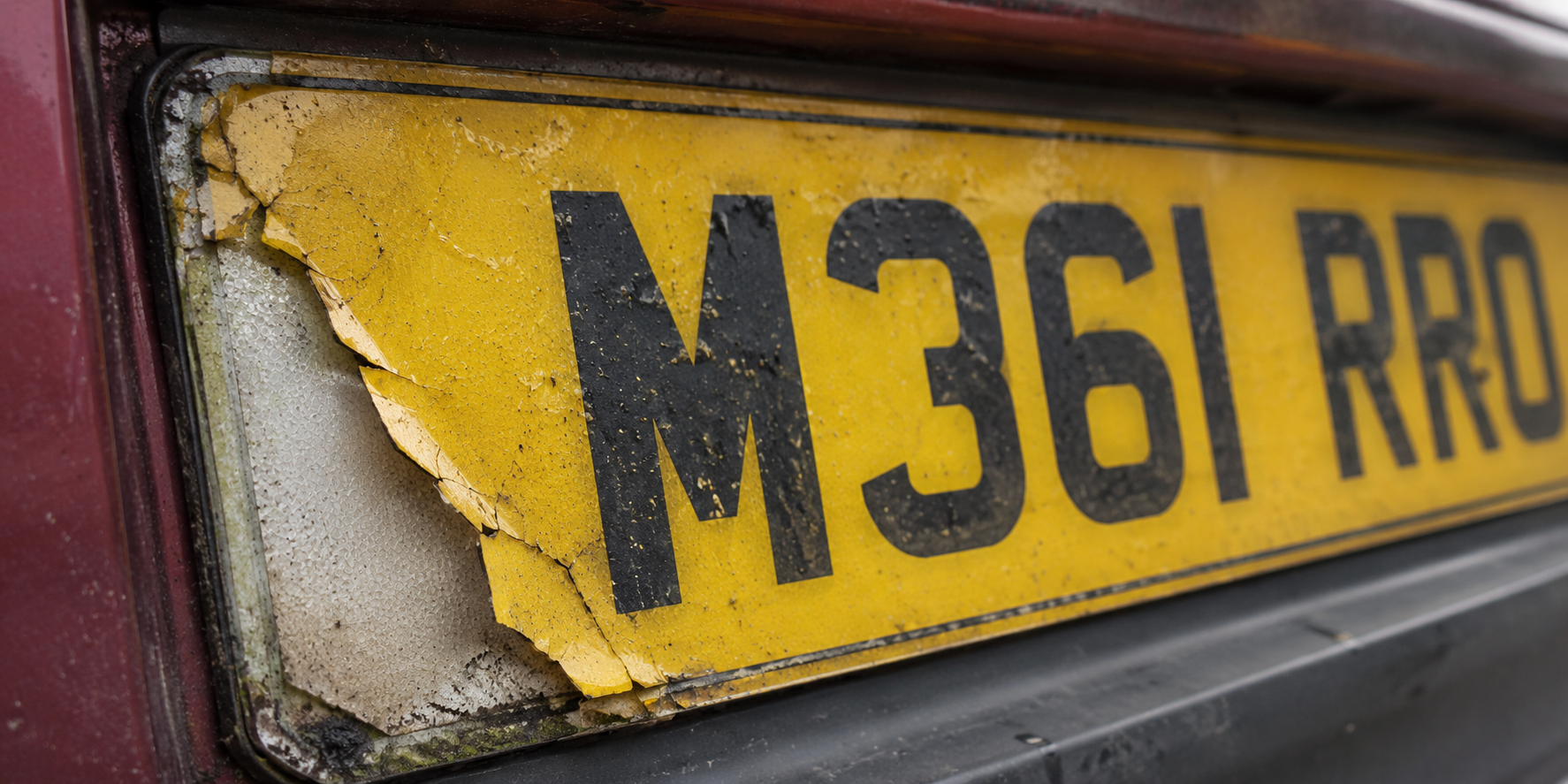
This process is known as delamination. It tends to start in small areas and spread across the plate. Once separation begins, repair is not practical, and replacement becomes the only reliable option.
This is why peeling often spreads faster after winter or repeated pressure washing. Once water enters the layers, deterioration becomes much harder to stop.
Cracks and Damage From Everyday Driving
Small impacts and pressure can cause cracks that worsen over time.
Daily driving exposes number plates to repeated minor stress. Stone chips from passing traffic can create small fractures in the surface, which may not be obvious at first. Over time, these cracks expand due to vibration and temperature changes. Plates mounted unevenly or secured too tightly can develop pressure points, leading to stress fractures.
Flexing during driving also weakens the material, particularly on thinner plates. This is often first noticed around screw holes, corners or mounting points where stress becomes concentrated.
Once cracking begins, moisture can enter and accelerate deterioration, reducing both durability and the plate’s ability to reflect light properly.
Cleaning and Maintenance Can Speed Up Damage
Incorrect cleaning methods can shorten the lifespan of your number plates.
Routine cleaning can cause damage if the approach is too aggressive. Strong chemicals can weaken the surface layer and affect the bonding underneath, leading to early peeling.
Pressure washers used at close range can force water into the edges, increasing the risk of delamination. This is especially common when the spray is directed repeatedly at lifting corners or poorly sealed edges.
Abrasive cloths or brushes may scratch the face, reducing clarity and reflectivity. Repeated exposure to these methods gradually breaks down the plate structure. A gentler approach using mild soap, water and a soft cloth helps maintain both appearance and durability over time.
When a Damaged Plate Becomes Illegal
A damaged plate becomes illegal when it is no longer clearly readable or reflective.
Even before legality becomes an issue, worn plates tend to make the whole vehicle feel older and less cared for. A faded or peeling plate can stand out immediately on an otherwise clean car.
UK requirements mean plates must:
- Display characters clearly and without distortion
- Maintain correct spacing and format
- Reflect light effectively for visibility
An MOT failure can occur if:
- Characters are difficult to read
- Fading reduces contrast
- Damage interferes with visibility
Automatic recognition systems also depend on clear plates, which adds another reason to address deterioration early.
Why BS AU 145e Matters for Durability
BS AU 145e ensures plates meet strict standards for durability and visibility.
Plates produced to this standard are tested for:
- Weather resistance
- Impact performance
- Resistance to delamination and edge deterioration
- Reflective quality over time
This standard sets a baseline for how plates should perform under real driving conditions. That includes visibility during rain, resistance to road grime and maintaining reflectivity during night driving, all of which affect both safety and MOT readability.
It does not remove wear entirely, but it reduces the likelihood of early failure when compared with non-compliant options.
How to Choose Number Plates That Last
Choosing compliant, well-made plates significantly reduces the risk of early failure.
Focus on:
- Plates manufactured to BS AU 145e
- A registered supplier who checks legal documentation
- Solid construction with strong layer bonding
- Acrylic thickness suitable for regular road use
- Acrylic thickness suitable for regular road use
- Avoiding ultra-low-cost options where quality is unclear
- Plates designed specifically for long-term outdoor exposure
If your current plates have deteriorated unusually quickly, it often reflects material quality, weak bonding or poor production standards rather than normal everyday use.
When replacing, take the opportunity to choose a higher standard. You can design your number plates with options built for durability and compliant display.
Replace Before It Becomes a Problem
Replacing worn plates early helps avoid MOT failure and unnecessary issues.
Visible damage rarely stabilises. Once reflectivity, clarity or structural integrity begins to fail, deterioration usually accelerates with continued exposure to weather and washing.
Peeling spreads, fading worsens, and cracks extend with continued use. Acting early keeps your vehicle compliant and avoids last-minute replacement.
A timely replacement means:
- Clear, readable registration at all times
- Reduced risk of MOT failure
- Longer-lasting performance from better materials
If your plates are already showing signs of wear, the next step is to design your number plates with a more durable build in mind. For guidance on fitment, durability or legal display requirements, you can also contact Demon Plates for support before ordering a replacement.
A worn or damaged number plate can make even a well-maintained car feel neglected. Replacing it early keeps the vehicle looking cleaner, staying compliant and avoiding avoidable MOT or visibility issues later.