



Customising your car should make it feel more personal, not harder to live with. The best place to start is with upgrades that improve the look, stay road legal and do not create problems later.
Many first-time owners buy parts too quickly. One week it is wind deflectors, the next it is a spoiler, then a cheap trim kit, then new plates. Before long, the car has several different ideas fighting each other.
A better approach is to build slowly and choose parts that suit the car, the way you drive and the look you want. This guide explains how to customise your car in the UK with a clear plan, sensible first upgrades and fewer beginner mistakes.
Start With a Plan, Not Random Parts
The best way to customise your car is to choose a clear direction before buying anything. A simple plan stops the build from looking mismatched.
Start by deciding what kind of finish suits the car.
Common styling directions include:
- OEM+, for a refined factory-style look
- Stealth, for darker trims and a more minimal finish
- Sport, for sharper styling and more visual aggression
- Show, for display-led impact rather than daily practicality
The theme does not need to be complicated. It just needs to guide your choices.
For example, gloss black badges, dark 4D plates and subtle trim changes can work well on a stealth build. A softer OEM+ look may suit 3D gel plates, factory-style wheels and small details that look like they could have come from the manufacturer.
The mistake is mixing every idea at once. Carbon-effect trim, bright decals, tinted lights, oversized spoilers and altered plate spacing rarely work together on a daily car.
A clean build usually looks more expensive because the choices feel connected.
Focus on High-Impact, Low-Risk Upgrades First
The best first modifications are visible, reversible and unlikely to affect how the car drives. They improve the car without creating new maintenance or legal problems.
Good starter upgrades include:
- road-legal 3D or 4D number plates
- tired plate replacement
- subtle graphics or decals
- badge refreshes
- trim restoration
- proper cleaning and decontamination
- tidy fitting accessories
- replacing faded or damaged exterior details
These upgrades work because they target the parts people notice first.
A faded badge, cracked plate or peeling trim piece can make the whole car feel neglected. Fixing those details gives the car a sharper look before you spend money on bigger modifications.
This is also where Demon Plates fits naturally. A number plate sits at the front and rear of the car, so it affects the first impression from both angles. Upgrading it can make the car feel cleaner and more complete without touching suspension, wheels or bodywork.
Upgrade Your Number Plates for an Instant Visual Boost
Upgrading your number plates is one of the quickest ways to improve your car’s appearance, provided the plates remain road legal for public roads.
Standard flat plates do the job, but they can look plain on a car with sharper styling. 3D and 4D plates add depth and definition while keeping the upgrade practical.
The key is choosing a finish that suits the build, not just the boldest option available.
3D vs 4D Plates
3D gel plates use raised resin characters. They give a smoother, rounded finish that suits subtle and OEM+ builds.
4D number plates use raised acrylic characters. They create a sharper, more defined look that often suits modern, sportier or stealth-style cars.
Both can work well on daily cars when made to the correct road-legal specification. The characters must remain clear, correctly spaced and easy to read.
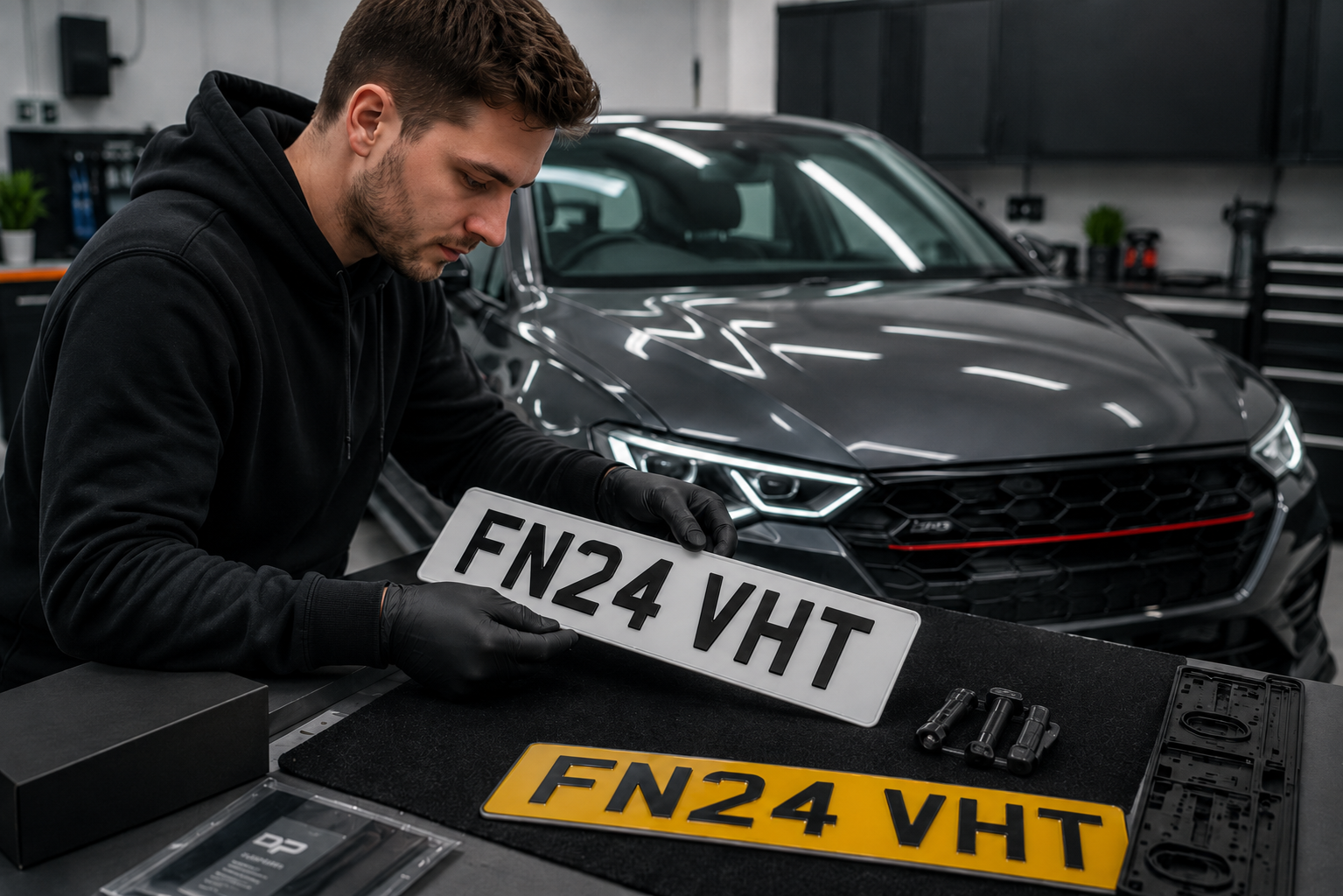
Avoid the common beginner mistake of using plates to fake a word or change how the registration appears. Altered spacing may look clever for five minutes, but it can create legal problems and makes the car look less carefully finished.
Why Plates Work as a First Upgrade
Plates are a strong first upgrade because they are:
- visible from the front and rear
- suitable for almost any car
- easy to replace when worn or damaged
- available in different finishes
- practical when kept compliant
- less risky than suspension, wheels or paintwork
A good plate does not need to shout. It should finish the car.
If the plate is crooked, cheap-looking or hard to read, it drags the rest of the build down. If it is clean, secure and matched to the car, it helps the whole setup feel more intentional.
If you are ready to begin, you can design your number plates directly through our easy-to-use plate builder online.
Know the UK Legal Rules Before You Order Parts
Staying road legal is not the boring part of customising your car. It is what stops a good-looking upgrade becoming a problem.
For legal number plates used on UK roads, the rules include correct spacing, reflective backgrounds, supplier details and British Standard marking. Plates fitted after 1 September 2021 must also have characters that are a single shade of black. Raised 3D characters are allowed when the plate remains compliant.
Window tint rules are also specific. For vehicles first used on or after 1 April 1985, the front windscreen must let at least 75% of light through and the front side windows must let at least 70% of light through.
Before changing anything, check:
- number plate spacing and font
- plate supplier markings
- BS AU 145e compliance where required
- window tint limits
- light colour and visibility
- whether the modification affects MOT checks
- whether your insurer needs to be told
The aim is not to scare you away from modifications. It is to avoid the obvious mistakes that attract attention, reduce visibility or make the car harder to sell later.
Use Simple Styling Details to Add Personality
Small styling details can make a car feel more personal without making it look overdone. Restraint is often what separates a clean build from a beginner build.
Useful styling details include:
- subtle side decals
- small accent graphics
- refreshed badges
- clean plate surrounds where suitable
- carefully chosen trim pieces
- matching fixings
- tidy adhesive placement
The best details look like they belong on the car.
A small decal can work well if it follows the body line. A badge refresh can make the rear of the car look newer. A clean plate setup can frame the front bumper properly.
The problems usually come from adding too much. Large graphics, random stickers, bright trim inserts and mismatched finishes can make the car look busy.
Pick one or two areas to improve first. Then step back and look at the full car before adding more.
Wheels and Stance Have Big Impact – But Come With Trade-Offs
Wheels and ride height can transform a car, but they are not always the best beginner upgrades. They affect cost, comfort, clearance and daily usability.
Before lowering a car or changing wheels, think about:
- potholes on your regular routes
- speed bumps and speed cushions
- tyre rubbing with passengers
- multi-storey car park ramps
- insurance changes
- tyre costs
- ride comfort
- uneven tyre wear
- whether the car still feels usable every day
A mild drop and sensible wheel fitment can look excellent. Going too aggressive too early can make the car frustrating to drive.
UK roads are not kind to extreme setups. A car that scrapes leaving a supermarket or rubs on a rough B-road may look good parked, but it quickly becomes tiring.
This is why it often makes sense to sort the visible details first. Plates, trim and light graphics can improve the car before you commit to expensive changes that affect how it drives.
Avoid Common Beginner Mistakes
Most beginner builds go wrong because too many parts are added too quickly. The car changes, but it does not improve.
Avoid these common mistakes:
- buying parts before choosing a style
- copying another car without considering your own model
- using show plates on public roads
- changing number plate spacing
- fitting cheap trim that fades or lifts
- overusing carbon-effect accessories
- tinting lights until visibility suffers
- lowering the car before checking clearance
- mixing gloss, matte and chrome finishes without a plan
- ignoring insurance or MOT implications
A good modification should solve something or improve something.
It might make the car look sharper. It might replace a worn part. It might support the theme of the build. If it does none of those things, leave it.
Choose Quality Over Quantity
A few well-made upgrades will always look better than a car covered in cheap parts. Quality affects how the car looks now and how it ages.
Low-cost accessories can be tempting, especially when you are starting out. The problem is that poor materials often show wear quickly.
Common issues include:
- peeling decals
- faded trims
- cracked plate acrylic
- weak adhesive
- loose fittings
- poor edge finish
- water trapped behind cheap plates
- characters that lift or mark easily
Those details make the car feel unfinished.
At Demon Plates, this is why fit, finish and road-use clarity matter. A plate is not just a legal identifier. It is one of the most visible styling details on the car. If it looks poor, the whole vehicle suffers.
Quality does not mean changing everything. It means choosing fewer parts and making each one count.
Build a Car You Can Actually Live With
The best custom cars are the ones you still enjoy driving. A modification is only successful if it suits real use.
Before committing to an upgrade, ask:
- Will it survive winter road grime?
- Is it easy to clean?
- Will it cope with daily parking?
- Does it affect visibility?
- Will it annoy me on long drives?
- Can I reverse it later?
- Does it suit the rest of the car?
This matters because most cars are not show cars. They sit in rain, collect brake dust, get washed in a hurry and deal with rough roads.
A daily build needs durable choices. That might mean road-legal plates instead of display plates, subtle graphics instead of a full wrap, or a mild stance instead of an extreme drop.
The best first mod is usually the one that makes the car feel cleaner and more complete without creating problems later.
Ready to Start? Begin With the Details That Make the Difference
The best way to customise your car in the UK is to start with visible, compliant and reversible upgrades. Build the car in stages, keep the style consistent and avoid changes that make daily use harder.
Number plates are a strong first step because they improve the look of the car without affecting comfort, handling or reliability. A road-legal 3D or 4D plate can add depth and definition while keeping the car practical for everyday driving.
From there, small details can shape the rest of the build. Choose parts that match the car, respect the rules and still make sense six months later.
If you want help choosing a road-legal plate style that suits your car, contact Demon Plates, where we can guide you through the right finish, fitment and display options before you order.