



Tinted number plates keep appearing more often on UK roads, so interest feels very real, and the pull is usually driven by appearance rather than regulation. A darker plate can look cleaner and slightly more refined, especially on vehicles with modern paintwork and trims, yet there is more involved than style alone.
This guide exists to help drivers consider tinted number plates with a clearer picture of what matters beyond first impressions. Visual appeal still counts, yet legality, safety, and long-term use deserve equal weight. With that balance in place, decisions tend to feel informed rather than rushed, and future inconvenience becomes easier to avoid.
Legal Compliance and Road Legality
UK number plate law is strict, so compliance matters more than many drivers expect. Plates must meet rules around reflectivity, font clarity, spacing, and background colour, all of which are enforced at road level rather than only during inspections.
Tinted finishes become an issue once they reduce reflectivity or affect how clearly characters stand out. Many drivers assume that a light tint is acceptable by default, yet that assumption often causes problems later. Legality depends on how the plate performs, not how subtle the tint appears when parked.
Tinted plates legality in the UK comes down to whether visibility and reflectance standards are still met across conditions. Darker shades tend to cross that line more easily, especially once lighting or weather changes. Police checks and MOT inspections focus on readability rather than intent, so a plate that looks fine in daylight can still fail under headlights or rain.
For drivers exploring tinted number plates UK options, verifying that a product meets road legal standards before fitting it tends to prevent issues. A plate needs to work legally every day, not just look right at first glance.
Impact on Plate Visibility
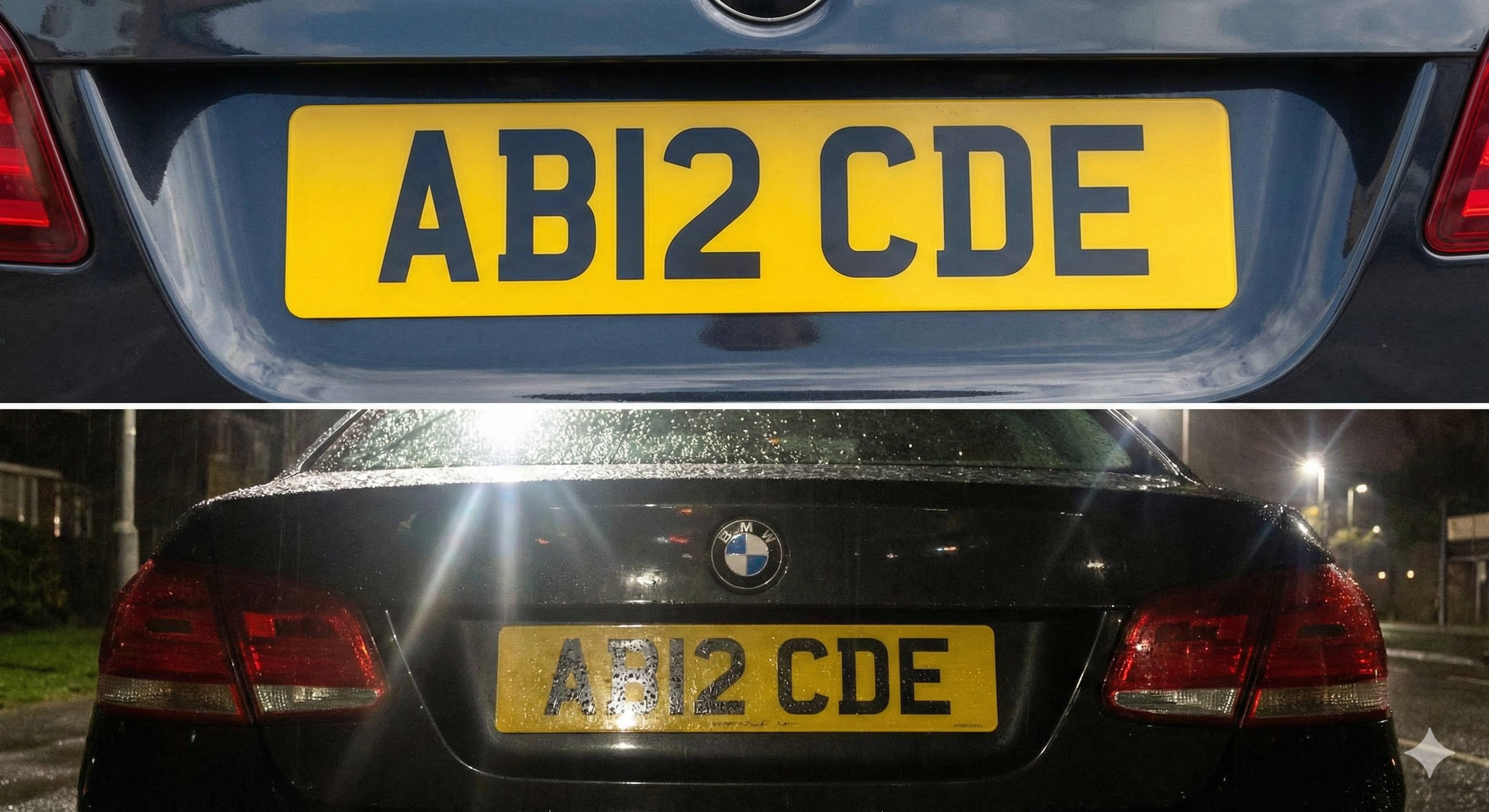
Number plate visibility plays a larger role than many drivers realise, so it affects safety, enforcement, and everyday driving. Tinting alters the contrast between characters and background, and that shift can seem minor initially, yet it becomes more noticeable once lighting conditions change.
Under headlights or street lighting, darker finishes reflect light differently, which can soften character edges. In rain or poor weather, reflective performance matters even more, and tinted plates tend to lose clarity sooner than standard ones. Plates are meant to be readable from a distance, so consistent contrast helps other road users identify vehicles during incidents or breakdowns.
Reduced visibility often draws attention during routine checks, which drivers find frustrating when the issue was not obvious beforehand. Over time, dirt and road film build up more quickly on tinted surfaces, so legibility can drop faster than expected.
This links directly to number plate visibility rules, which focus on consistency rather than appearance. For drivers weighing style choices, thinking about how a plate performs day after day usually leads to better outcomes.
Risk of Fines and Penalties
The financial side of non-compliant plates is easy to overlook, yet it tends to surface quickly once a plate draws attention. Police officers regularly check registrations during routine stops, and tinted finishes that affect clarity can lead to immediate action.
Fines are common, and drivers may be required to replace plates straight away, which adds inconvenience alongside cost. An MOT failure is another likely outcome, meaning a vehicle may not be road legal until compliant plates are fitted.
These situations rarely feel minor at the time. Follow-up costs build quickly, and tinted number plate risks often extend beyond money. Repeated attention from enforcement can create ongoing frustration, even if the tint was subtle.
Choosing compliant plates from the outset reduces these risks significantly. It keeps everyday driving calmer and avoids the feeling that a small styling choice has turned into a repeated problem.
Compatibility With ANPR Systems
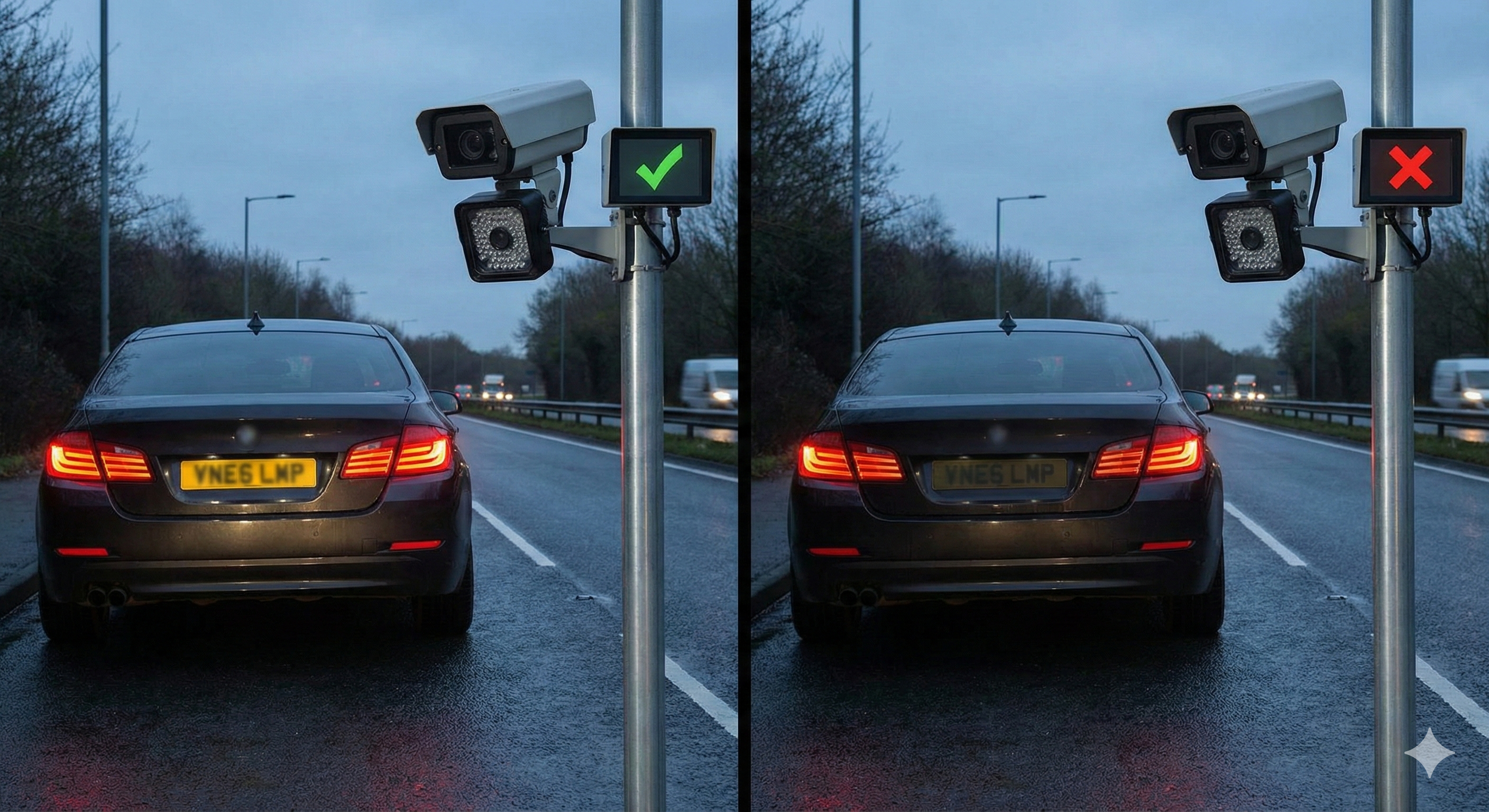
Automatic Number Plate Recognition systems rely on clear contrast and reflective surfaces, so ANPR compatibility becomes an important consideration. These systems capture plates at speed, often in low light or poor weather, and convert images into readable data.
Darker tints can interfere with this process, leading to misreads or failed scans. Drivers may never notice this directly, yet it can trigger stops or follow-up checks after a journey. Over time, repeated scanning issues can flag a vehicle more often than expected.
ANPR is used by police, local authorities, car parks, and toll services, so its reach is wider than many drivers realise. Plates that struggle to scan consistently can create inconvenience long after the novelty of a tinted finish fades.
Maintaining compatibility with recognition systems supports smoother journeys and avoids unnecessary attention. For drivers weighing visual changes, plates that work reliably with ANPR tend to cause fewer issues in everyday use.
Long Term Practicality and Maintenance
Long-term use often reveals issues that do not show up straight away, so maintenance deserves real thought. Tinted plates pick up dirt, road salt, and traffic film more quickly, which turns cleaning into a regular task rather than an occasional one.
Over time, repeated washing can dull the surface, and some finishes begin to look uneven or cloudy. This affects readability, yet drivers often notice it only after months of use rather than immediately.
Weather exposure plays a role as well. Sunlight, moisture, and temperature changes can alter tint depth and reduce clarity gradually. Replacing plates sooner than planned adds cost, which feels frustrating after the initial purchase.
Plates that remain compliant and easy to maintain usually offer better value across years of driving. Thinking ahead about upkeep helps avoid finishes that look good briefly but disappoint over time.
Each of these five points ties back to one idea: that style should never outweigh legality and usability. When drivers consider tinted number plates carefully, the choice becomes about balance rather than trend.
Legal compliance, visibility, enforcement risk, ANPR response, and long-term upkeep all affect daily driving in practical ways. Demon Plates focuses on compliant solutions that respect these factors, so drivers can achieve a clean look without unwanted consequences.
Exploring approved options keeps vehicles road legal and stress-free, which tends to matter more in the long run than any short-term visual gain.