



Choosing number plates for a performance car comes down to more than picking the boldest character style. The plate sits among the grille, bumper, trim, badges and other details, which means its visual weight can change how the whole car looks.
The best starting point is to decide whether you want the registration to blend into the car, add a little depth or become a deliberate styling feature. From there, consider the plate recess, registration length and how you use the vehicle.
At Demon Plates, we think the plate should work with the build rather than compete for attention.
Match the Plate Style to the Car's Design
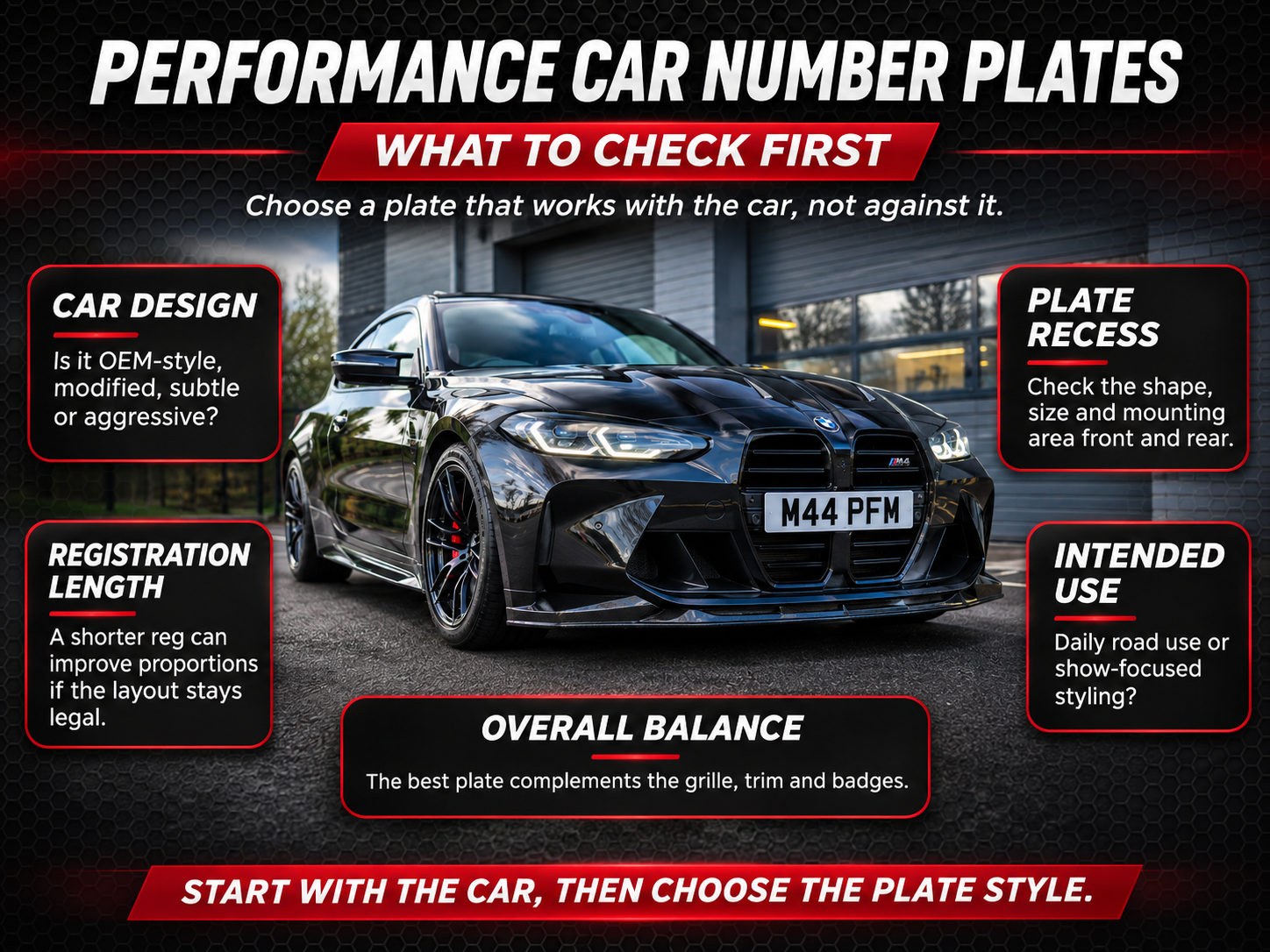
Start with the vehicle rather than the plate catalogue. The right plate should complement the car's shape, trim and level of modification.
Consider whether the car is:
factory-standard or modified;
subtle or aggressive;
classic or current;
daily-driven or show-focused.
A standard Porsche 911 may suit a restrained plate, while a modified Golf R can carry stronger detailing. Performance does not automatically demand maximum visual impact. Start by choosing the right style of number plate.
Check the Shape and Size of the Plate Recess
Check the available mounting space before deciding which proportions look best. Front and rear bumpers can provide very different plate areas, particularly on cars with large grilles or sculpted bodywork.
Look at:
the width and height of the existing recess;
the shape and flatness of the mounting surface;
existing screw holes or fixing positions;
the length of your registration;
differences between the front and rear mounting areas.
A narrow-looking front bumper does not give you licence to compress the registration. Character dimensions, spacing and margins for road-use plates are controlled by the applicable regulations.
Our number plate size guide provides further guidance when you are working out suitable proportions.
Choose Between Printed and Raised Characters
Printed characters give the registration a flatter, more restrained appearance. Raised characters introduce physical depth, making the plate a more noticeable part of the exterior design.
Neither approach is inherently better.
For a factory-standard performance saloon, a conventional printed plate can preserve an OEM-focused appearance. On a modified hot hatch, raised characters may sit more naturally alongside sharper exterior details.
The useful question is not whether raised characters look more distinctive. Ask whether you want the plate itself to attract more attention.
This decision should come before choosing between individual raised styles. It prevents you from adding depth simply because it is available.
How Do 3D, 4D, 5D and Prism Plates Compare?
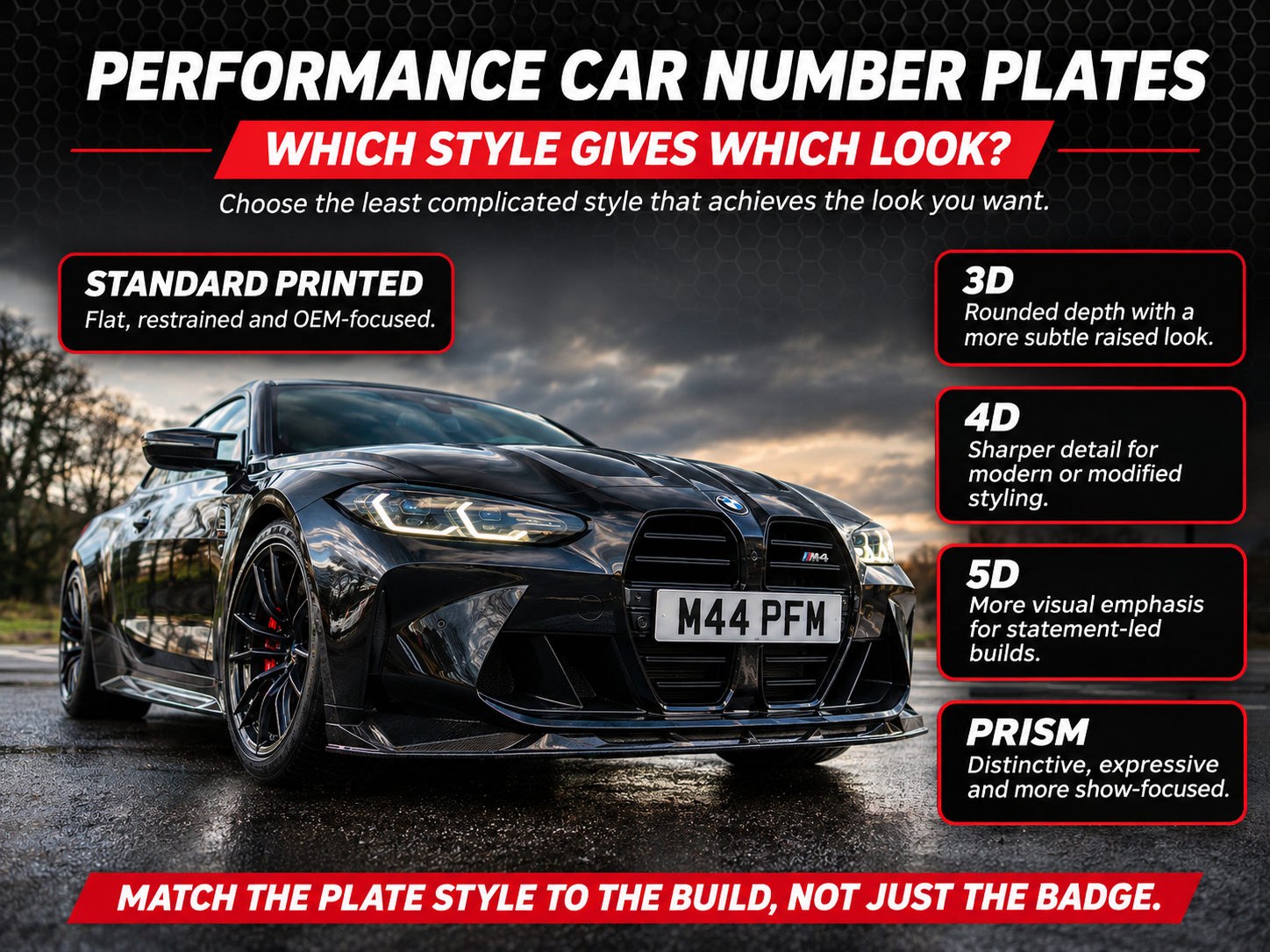
From a styling perspective, these choices differ in the amount and type of visual emphasis they give the registration. Choose according to how prominent you want the plate to appear alongside the rest of the car.
Style | Visual Direction | Styling Approach |
Standard printed | Flat and restrained | Factory or OEM-focused appearance |
3D | Rounded raised effect | Added depth without making the plate the main feature |
4D | Sharper raised profile | Stronger fit with modern or modified styling |
5D | More statement-led | Builds where the registration is intended to carry greater visual emphasis |
Prism | Distinctive treatment | More expressive styling where the plate is deliberately noticeable |
You can explore Demon Plates' 3D number plates, 4D number plates and 5D number plates once you know how much prominence you want.
Avoid treating this as a ladder where more visual impact automatically means a better result. A restrained plate on a carefully preserved performance model can look more considered than several competing custom details.
Choose a Finish That Works With the Car's Existing Details
Consider the complete exterior palette, not body colour alone. Wheels, grilles, badges, trim and gloss, matt or carbon-effect details all contribute to how busy the vehicle already looks.
A car with extensive black exterior detailing may suit a plate with stronger character definition. The same approach can become excessive when combined with an intricate grille, contrasting trim, a prominent splitter and several other styling features.
View the plate from a few metres away. If your eye goes immediately to the registration when the car itself should be the focus, reducing one styling element may produce a more coherent result.
Bordered or Borderless: Which Works Better?
A border gives the registration additional definition, while a borderless design reduces the number of visual elements around the characters. Neither choice is universally better.
Look at what surrounds the plate. A relatively plain bumper may carry extra definition well. If you already have raised characters and several strong exterior details, another outline can make the area appear crowded.
For road use, optional borders must meet the relevant legal requirements. Current specifications restrict factors including their position, appearance and width. Styling freedom still sits within those limits.
Can You Use a Short Plate on a Performance Car?
A shorter plate can remove unnecessary blank space when the registration permits it. You cannot reduce legal character dimensions, spacing or required margins merely to create a smaller appearance.
This distinction matters most with personalised registrations. A short registration may allow different overall proportions from a conventional seven-character mark while retaining the required layout.
Measure the available area, check the registration itself, then consult the number plate size guide before ordering. Avoid choosing dimensions from photographs alone, since bumper shapes and registration lengths can make similar cars look different.
Think About Everyday Driving, Not Just the Photos
Choose a plate for how you use the car, not just how it looks when parked. A daily driver, weekend car and show build can have different styling priorities.
A factory BMW M car may suit restrained detailing, while a modified weekend car gives greater scope for visual impact. Show plates intended solely for display must not be used on public roads.
Our guide to show-ready and everyday styling can help you weigh those priorities.
Make Sure a Road Plate Meets UK Requirements
Performance-car styling does not change UK road-use rules. Plates must meet the applicable requirements for materials, backgrounds, characters, spacing and markings.
Current plates require reflective material, black characters and the correct white front and yellow rear backgrounds. Plates fitted after 1 September 2021 must meet BS AU 145e requirements. Raised 3D characters are permitted when the finished plate complies with the rules.
Never alter character spacing or layout to create a different appearance.
Why Does the Number Plate Supplier Matter?
For road-use plates, choose a registered supplier which follows the required production and documentation process. A legitimate supplier needs evidence confirming your identity and entitlement to use the registration.
A heavily customised plate offered without the appropriate checks should prompt caution. The supplier's details also form part of the required markings on a road-use plate.
This matters because appearance is only one part of the order. Correct registration display, documentation and compliant production need to be considered at the same time.
Which Number Plate Style Should You Choose for Your Performance Car?
Choose the least complicated plate which achieves the look you want. Build the decision around the vehicle first, then add visual emphasis only where it contributes to the complete design.
Use this order:
Decide whether the car is OEM-focused, lightly modified or heavily styled.
Check the front and rear plate areas.
Consider the length of the registration.
Choose between printed and raised characters.
If you want raised characters, compare the available styles.
Decide whether a border improves the overall composition.
Check whether the registration permits shorter plate proportions.
Account for daily, weekend or show-focused use.
For road use, confirm the final configuration meets the applicable requirements.
Once you know how much visual emphasis the plate needs, you can make your number plates using the Demon Plates builder and compare the options against the car as a complete design.
Sometimes the right performance car number plate should be noticeable. In other cases, the best choice is the one which lets the car do the talking.